Wednesday, November 24, 2010

After school

@facebook

Yes, I'm back to school, but this time, it's the Tokyo School of Japanese Language. Everyday lessons, tests, small classrooms, teachers, homework - just like high school. And the atmosphere's exactly the same, we always have a good laugh and no one is really that stressed about the whole thing. Of course, there is a bit of rivalry and some usual conflicts but that's natural and nothing to be concerned with. Also, for the past three months all the Vulcanuses have really come close to each other. We hang around a lot, go out all the time and organise small excursion to various places in and around Tokyo. Our high school lifestyle has it's up and downs, though. Since we are a tad older and used to the freedoms of college, it's sometimes hard to study on a daily basis as well as regularly attend classes. The schedule of our language course is really tight so we are not allowed to be absent almost at all and have a lot to study. Fortunately, the school does its job very well and we're already able to speak some simple Japanese in everyday situations. Laying emphasis on conversation skills is, by the way, an important feature of our lessons and one that the school is famous for.


The Naganuma School was established just after World War II, thus being one of the first Japanese institutions freely teaching the language to foreigners. The classes are diverse - apart from regular grammar / conversation / writing / listening practice, we sometimes use the computer room and the special language laboratory, where we record our voice and improve our pronunciation. There are seminars and other occasional activities like calligraphy, tea ceremony or Tokyo field trips. All these activities combined with extremely long commuting leave us little time for anything else on weekdays. Sometimes, however, I do manage to find the energy to explore the city some more and take an after-school stroll around Tokyo. Here are some random thoughts on...


Shibuya. I wrote about my first trip to this district here. Back then I wasn't aware of the fact that I would visit it everyday since that's where my school is. Below you can see a bonus clip of the crossing as seen from Shibuya Station on a rainy night. The facebook album contains some pictures taken on my usual way to school as well as in other surrounding districts, like Chiyoda (near the Hanzomon Gate) or Setagaya (especially the cool Shimokitazawa neighbourhood, our favourite party spot).


Tokyo Disaster Prevention Center (Ikebukuro Bosaikan). Located in Toshima, it was the destination of our first school field trip. As a part of the Tokyo Fire Department, it fulfills the noble mission of educating the townspeople about the basic actions they should take in case of various natural disasters that frequently invade Japan. During our visit to the Bosaikan we took part in elaborate simulations that empirically taught us how to react to danger. We had to find our way out of a small maze of typical office corridors filled with smoke, keeping close to the ground and following the exit signs. We learned how to use real extinguishers putting out a virtual fire in an amusing yet difficult computer game. In a special room mounted on top of a moving platform we could experience a genuine magnitude 7 earthquake and prepare some hiding strategies. Finally, dressed in waterproof outfits, we faced a powerful typhoon and realised how hard it is to stand straight or even breath when an extremely strong wind hits your face with streams of cold water. All those events were preceded by a short introduction by our Japanese guide and in the end we watched a rather silly informative movie in Bosaikan's small theatre. All of this was a lot of fun (when not treated too seriously) but also a piece of useful information and I'm glad our tutors had thought about taking us there.


Ginza. A district of Chuo, it's unquestionably the most luxurious and expensive place in all of Tokyo and therefore one of the fanciest urban areas on Earth. Often compared to Manhattan's Fifth Avenue, it hosts a great number of department and flagship stores of the world's biggest fashion, jewelry and electronics brands like Tiffany, Gucci, Chanel, Dior, Apple or Sony. There's gold dripping from each wall and the smell of wealth in the air. You can see the elite of westernized Japanese businessmen with their kimono-clothed wives and butlers in white gloves. Let's just say it's a bit too expensive for a poor student like myself.


Welcome to Japan Party. Although it has little to do with my after-school trips, I've never had the opportunity to mention it here, so I'm doing it now. Organised a while ago by Vulcanuses in Europe, it was the proper welcome party that allowed us to integrate better with each other and with our new Japanese friends. It took place in Marie's (yes, the same who took us on a tour of Yokohama) house and was obviously very enjoyable. Just look at the pictures over here and you'll know why. And that's the end of this incoherent post.

Thursday, November 11, 2010

Akihabara - the electric town

@facebook

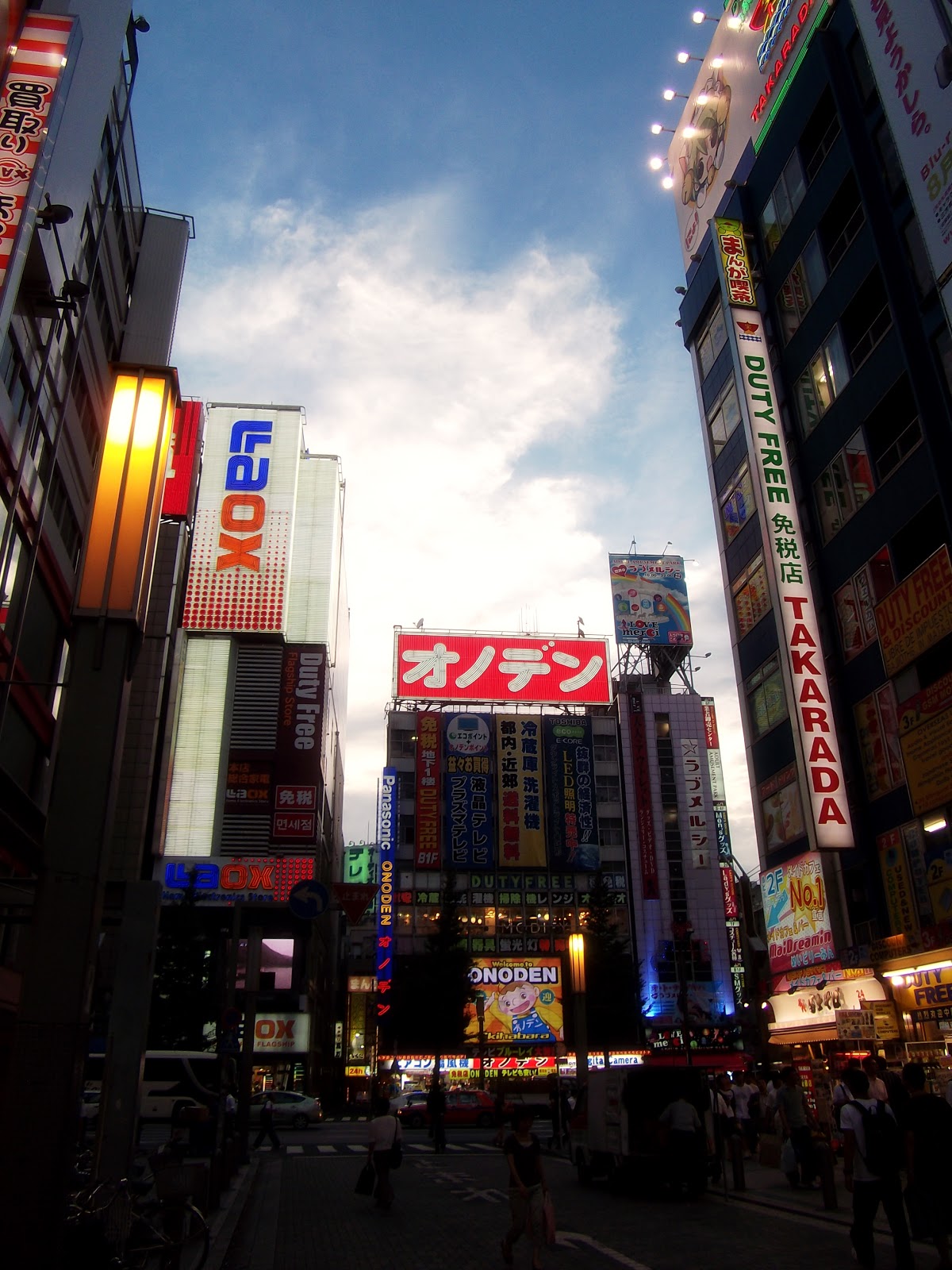
Let's make things clear. I don't want to write any travel-guide slogans but if you ever go to Tokyo and have even the slightest interest in either electronic consumer goods or Japanese pop culture, you should visit Akihabara Electric Town. This relatively small (according to local standards) shopping area is a part of Chiyoda and stretches across only a few blocks. It is, however, packed with numerous street stalls as well as huge, many-storied, luxurious department stores offering their customers any kind of electrical equipment and hobby related commodities. Otakus come here from all over Japan to admire their favourite manga, anime, computer games and figurines of the characters in all sizes (including real-life scale). There are shops with do-it-yourself models, specialised magazines, really strange souvenirs, basic electronic parts or wires, not to mention newest computer hardware or even prototype robots. What's truly unique and pleasantly nostalgic, you can also buy some vintage stuff like prehistoric gaming systems or wooden-case equipment. Namely everything that runs on electricity is here, no matter if it's old or new. No wonder that this place attracts a lot Chinese millionaires who spend here their fortunes on "cool Japanese stuff", so fashionable in the Far East countries. And yes, the prices are sometimes sky-high, but at least it's always free to look.


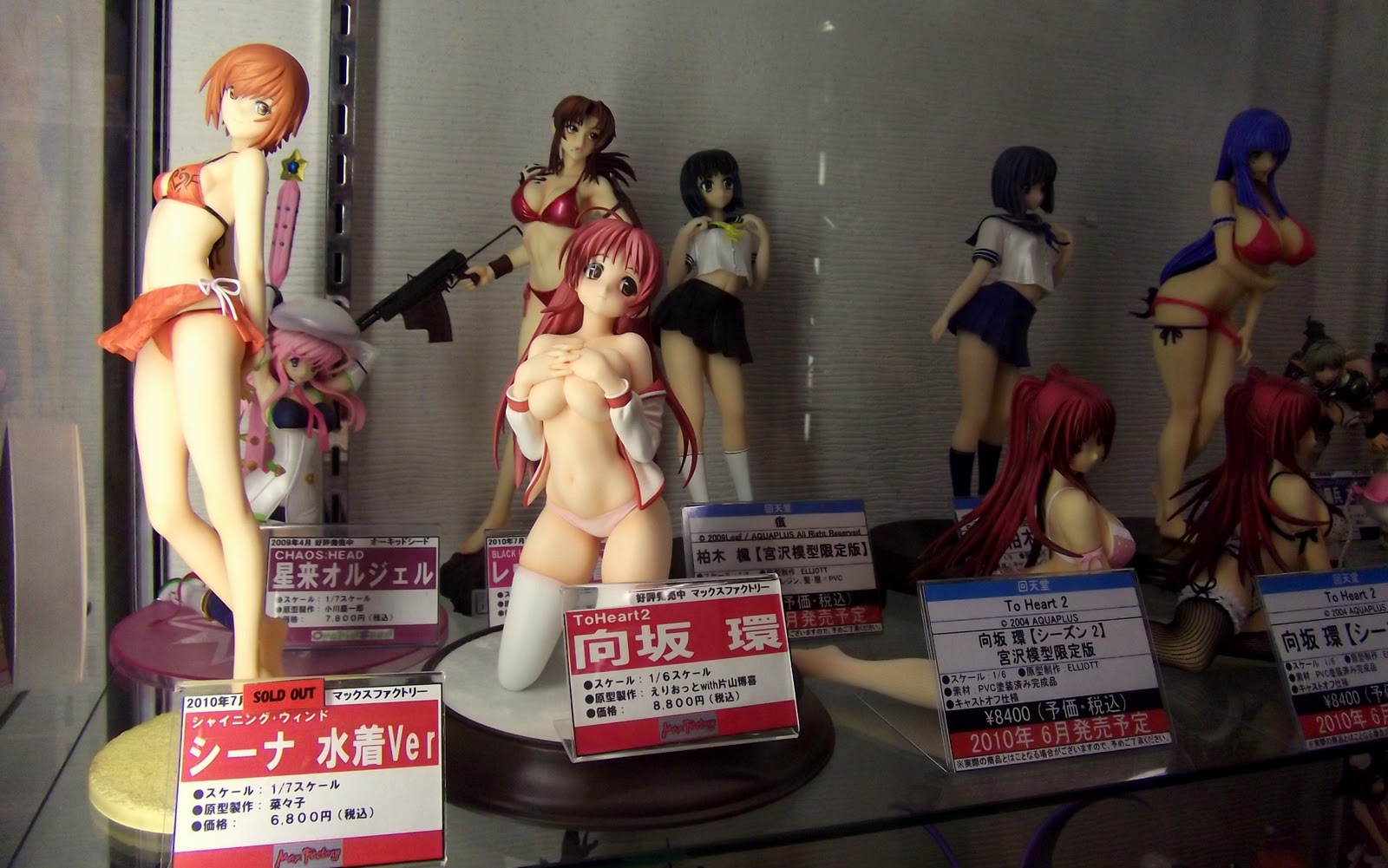
Also, I've never considered myself a true manga fan, but I have watched some of the most well-known ones in my time. And I have to say I was just in awe of all the stuff I found in Akihabara. Clothes, mugs, mouse-pads, chopsticks, carpets, toilet-seats - everything in anime-related themes and obviously way to expensive. I especially liked all the beautiful, hand-made, precise figurines, strongly exposing heroines' womanly attributes. There was also a fair amount of hentai and special toys for adults, some of witch even I was too embarrassed to photograph. But this is Japan, erotica is around every corner and not a huge taboo. Of course, it's also really well hidden from the kids, so no worries here. And speaking of adult entertainment, Akihabara also offers a wide range of "meido kafe" with cute, cosplaying waitresses. According to rumors, not only coffee is served there.


The Electric Town is really a lot of fun and surely a landmark in modern Japan's landscape. Although I have been there a few times (mostly to get good deals on my mobile phone and Internet connection), I never managed to take photos that would clearly show the specific atmosphere of the place. So this time I would like to post a picture by Rob Sheridan. Make sure to visit his gallery of some amazing Tokyo pics. It's here.

Sunday, November 7, 2010

Aizu Wakamatsu - the spirit of Japan

@facebook

The last weekend of October was home stay time for all Vulcanus students. We applied for it a couple of months ago (while still back in Europe) by filling out a special form with detailed information regarding our interests and preferences towards the Japanese host family that was going to take us under their roof and take care of us for these few days. The whole event was organised and conducted by Aizu Wakamatsu International Association with some help by our own EU-Japan Centre. After some good as well as pretty bad experiences in Japan, we thought we could expect almost anything from this programme and with mixed moods departed from Shinjuku on Friday morning. The four-hour bus trip took us on a relaxing tour around the picturesque autumn landscapes. Through tunnels drilled in enormous mountains we eventually got to our destination - the vast valley of Aizu.


Aizu Wakamtsu, the capital of the Aizu region, is a small city located in Fukushima Prefecture, about 300 km north from Tokyo's center. The moment we got there, we knew the reasons why it had been chosen for the home stay. Beautifully quiet, old, traditional and very different that Tokyo, it looked so promising. Aizu Wakamatsu dates back to 14th century when it was founded around the majestic Tsuruga Castle, the military and administrative center of the Aizu region until 1868. However, during the infamous Boshin War (a civil war of 1868/1869) the whole town was destroyed by the winning imperial forces. Before the war, Aizu was a loyal supporter of the old Tokugawa shogunate and therefore an enemy to the anti-samurai, pro-western reforms of young Meiji emperor. Fortunately for us, the town was re-founded in 1899 and since then, most of it's historic structures have been rebuilt. What can we all learn from this lengthy introduction? Well, Aizu has a strong bushi spirit and might be a good scenery for some kind of 'Last Samurai' movie.


After arriving we grabbed some nice udon in a small, cosy restaurant, the owner of which even took pictures with us. Then we met with Kita-san in front of the town's Boys' Statue and took a local bus for The University of Aizu. This relatively small college is famous for teaching exclusively computer science with international professor staff. This cosmopolitan school was a good place for a discussion about Japanese customs, gestures, art, stereotypes and culture in general. We divided into small groups and tried to figure something out together with Japanese, Chinese, Indian and Russian students of Aizu. Unfortunately, there was not enough time to go through the topics thoroughly but we still had a good time and made some friends. After small presentations of our results (most of which were hilarious) we met with the host families and headed for our new homes to get some much needed rest.


My host family, the Tashiro family, consisted of a mother, a father (both teachers of Japanese) and a cat (not a teacher). Their son, an art student at the University of Tokyo, was staying in the capital at that time, leaving his room just for me. I don't want to get into too much detail about everything I was doing during my stay there - suffice it to say that it was such a warm and funny time, definitely one of my best in Japan. I really felt as if these people were my family and I was just visiting some (very) distant relatives. They prepared some great and diverse traditional meals (like tempura, ramen, mushroom rice, shellfish and clam miso soup, to name just few) as well as the famous, time-honoured, hot Japanese ofuro bath. During the day, they took me out to do some shopping in a huge food market (I stuffed myself with free food samples handed out generously by shopkeepers) and to admire the beautiful and unique Japanese art in small local galleries. Being filled with samurai spirit for centuries, Aizu's people have a love for fine arts and precious craftsmanship. So we went to see the Urushi Festival, which is an annual exhibition of various wares (like paintings, sculptures, dishes or toys) painted with a special type of red or black lacquer (urushi) - the local speciality made from tree resin. One of the most notable examples of these beautiful and very expensive goods are figurines of the town's mascot - Akabeko, a red cow constantly nodding it's head. According to a legend, a long time ago people used cows for transporting wood used to build temples. During the construction of Aizu's biggest temple, all the cows fell down from overworking except for one. Since then, the sole survivor, Akabeko, has become a symbol of discipline, endurance and persistence - the virtues praised by all Japanese. Going back to my activities during the home stay, I was very glad to learn that my 'father' loved to play the guitar. We had some interesting conversations about Japanese music and played a little while sipping whiskey on the rocks. And the guitar was an old flamenco one. Priceless.


Furthermore, probably the most shocking experience was meeting a family friend, Kojima-san. We drove for about an hour into the woods to find ourselves in the middle of rice fields, surrounded by mountains and in front of a big wooden tatami house. As we entered the cold room we saw him in the middle, sitting on the floor with an American cigarette in his mouth and piles of papers, dishes and pillows around him. He was by far the most eccentric Japanese person I met and I was really surprised by his knowledge of Polish history. By the way, a lot of people I met in Aizu knew a lot about my country - from Chopin Year Celebrations to Cracow's Wawel Dragon. Kojima-san, a teacher and an amateur rice farmer, treated me to coffee with a bit of 'magical' water he makes by himself. How does he make it? It's a secret. I also learned he is a direct descendant of a samurai family and that we both shared fondness of Kurosawa's movies.


On Sunday evening we had to go back to Tokyo. Everyone was happy as ever and wanted to stay in Aizu just a bit longer. We felt very welcome and missed the kind of warmth and hospitality only a family can give. After saying goodbye and exchanging contact info, we departed for Tokyo. This time the dusk hid all the trees and mountains from us. But in the end we got to see the lights of the Infinite City, stretching as far as the horizon can go.


Thursday, October 28, 2010

Oktoberfest in Yokohama


@facebook

It's October, time for some Fest. Even in Japan? Yeah, apparently it's celebrated everywhere these days. Even though I am not a big fan of German folklore, I am definitely keen on some beer now and then, especially European. And the image of a typical Bavarian festival in oriental surroundings seemed so silly and yet so appealing that I deiced to go the moment I heard about it from Emmanuel. So I grabbed some Vulcanus friends (not literally, of course...) and headed for Yokohama, to the already-known carnival spot between western-stylized red brick buildings. Fortunately, this time the often fitful autumn weather was kind enough to be sunny. So... how was the party?


First of all, it was crowded. Lines of people before the entrance, lines for beer, lines for food, etc. But it was a big event and I should have expected nothing less. There were some gaijins, of course (Germans and Americans, for instance), but the venue and it's surroundings was filled mainly with Japanese craving for some exotic entertainment. Because how else could the locals call downing a fine weisswurst with a pint of even finer bier. The main spot was occupied by a huge tent with long benches, tables and a stage set up for a coarse brass band in traditional costumes. The sight of tipsy Japanese shouting "kanpai!" and dancing ecstatically to the sounds of German folk sing-alongs was surely a precious one. And to tell the truth, I felt quite content surrounded by plates of steaming "meat and potatoes" variations, boot-shaped beer mugs and cheering blonds. For a second there I felt some Silesian spirit and distant European air. (Un)fortunately, the prices brought me down to Japanese earth. Nonetheless, it was a very pleasant afternoon spent integrating with Vulcanuses and practicing Japanese with random chat buddies. And afterwards we headed for the famous Shibuyan Atom Club to dance away all those beers. But that's another story.

Wednesday, October 20, 2010

Kamakura - a link to the past

@facebook

I was told that there are actually two Japans. The first would be Tokyo and other major cities: modern, cosmopolitan, made of steel, glass and concrete. Always bright, always crowded, never asleep. The second would be the small towns, scattered around the countryside. A bit forgotten, old and wooden, closer to the nature and tradition. Of course Japanese manage to combine the two worlds pretty well: there's a lot of tradition in the Capital's centre and some modern stuff in even the tiniest of villages. But I really wanted to experience this other, smaller Japan, especially after a tiring night at Roppongi. The perfect place to visit is Kamakura, a half an hour by train to the south of Yokohama. A picturesque medieval town stretching from the Ocean's shore to the nearby hills. Densely covered with forests, shrines and temples, a popular hiking destination for the Japanese from big cities, mostly during weekends and national holidays. We (myself and seven other Vulcanuses) also visited the place during a holiday: September 20th is Respect for the Aged Day in Japan. So... what's up in the countryside?


First of all, an important fact: Kamakura used to be Japan's capital city in the Kamakura Period (yeah...) sometime between 1185 AD and 1392 AD. It was where shoguns from the Minamoto family resided. They overthrew the fragile reign of Kyoto emperors and established a military government in their faraway home town. The predominant ideology of those times was Zen Buddhism praised by the ruling warrior class of bushi (we call them 'samurai', which is a bit incorrect). Hence so many Buddhist temples in the area, which also was an important stronghold during the XIV century's Mongolian invasions on Japan. The first temple is actually a few meters away from the train station - it's the great Engaku-Ji, the Temple of Spirit or Perfect Enlightenment. It was build by the shogun after his victory against the Mongolians in order to express his gratitude and ease the souls of people who died in the war. The temple itself is a pretty big complex of different purpose buildings. I've never been to a Buddhist temple and I was charmed by the beautiful gates leading to different areas and the sacral places with many Buddha statues and altars. Everything there is wooden, some of the buildings are 700 years old, some were rebuild in latter eras after fires. There are also some graveyards (which is a distinctive feature of Buddhist temples - Shinto shrines don't have them) and small grottoes carved in the surrounding rocky hills. The place has many visitors yet it's very quiet and beautiful. I felt as if I went back in time a few hundred years, to the times of shogun and samurai. A great experience.


Then we went along the Daibutsu Hiking Road to see the famous Great Buddha statue. The narrow path led through a kind of familiar looking forest (apart from some bamboos maybe) situated on some steep hills, which gave as a great view of the beautiful landscape with the seaside and the whole town in the distance. If I hadn't known that it used to be the capital city, I would have never guessed - now it look silly compared to Tokyo. We passed some other temples along the way (some of them are branches of Engaku-Ji, which is a regional Zen centre). We also visited a small Shinto shrine or rather an altar hidden deep in the trees. Of course, before entering the holy ground, we had to wash our hands and mouths with water pouring from a cute blue dragon statue. Back home, I would never agree to do any religious practices, but here... it's Japan and I have to try everything. The nice thing about the humble Shinto shrines is an always present rack with small pieces of wood or paper attached to it, on which people can write down their wishes and intentions. During the walk I got to meet Tetsu-san, a 2009-2010 Vulcanus in Europe (Germany) student, who happened to visit Cracow and liked it a lot. Finally, we got to the Great Buddha. The copper monument was pretty impressive, about 10 m high and surrounded by lots of lots of tourist. After taking some typical Daibutsu photos and even going inside the statue (extremely hot), we went to eat some great ramen and ended up on Kamakura's beach. Everyone was too tired to do anything else, so we went back home. The end. Kamakura was definitely different than Tokyo. Closer to the nature, tradition and religion, it was indeed a very different Japan.