@facebook
...it is difficult to concentrate. For someone born and raised in a very beautiful but still quite marginal periphery of Europe, the modern Tokyo seems like a city of tomorrow. Not everything here is perfect, obviously, but for the most part it's a relatively clean, well-organised, safe and truly exciting place. Also very different from some big metropolises of the Old Continent I've visited, since it combines the all-around comforts of technology and state of the art urbanisation with traditional elements of Japanese culture and popculture. So next to the tallest glass towers there are some small wooden temples snoozing quietly in lovely parks with fish-filled ponds. Just a few steps after the biggest crossing with six-lane multilevel streets, five different pedestrian bridges and ten lines of metro, monorail and regular train intersecting above and below, you can stumble upon a narrow picturesque street with traditional small stores, ramen shops and stalls selling all kinds of stuff. Tokyo is a delightful city of many colorful contrasts.
At times, however, it can be somewhat depressing. In this ocean of people, wealth, fashions and success you can painfully see how small, unnecessary, insignificant and imperfect you are. And the everlasting loneliness is multiplied by all the passers-by you want to talk to or touch but you can't... by all the places you want to go but don't have time... by all the things you want to have but can't afford. And you miss your previous life back in Europe, your friends and loved ones, your favourite places and drinks but you grow apart and they start to be just memories, fading away each day. But than you realise that you can't really replace them here with anything new because of this perpetual loneliness and isolation. Finally, you find yourself suspended in this dream world, not wanting to go back home but also not having anything to look forward to or even relate in to this surrealism. Maybe it's the language, maybe the mentality, maybe the stereotypes or fear of rejection but it's so hard to really integrate and finally feel secure, valuable. Only the everyday obligations like school or work can keep you in touch with reality but kind of suffocate you at the same time, which doesn't help in the long run.
Tokyo is neither an utopia nor a dystopia, it's just a few years ahead of the world I'm used to. It's definitely not a soulless concrete giant like some like to depict it. Even though it sometimes tends to bring up some gloomy feelings, I got to like it a lot, but it's more of an addiction by now. Still being in one of the biggest, if not the biggest city in the world gives me some satisfaction. And I'm not done exploring it yet. Linked to this post you can find some pictures I took all around Tokyo that I think correspond to it's futuristic, astonishing nature. But mostly they are just random. They show the most impressive commercial and business districts of Shinjuku and Chuo (both alternatively considered de facto city centres) but also some more obscure places visited with my friends. Enjoy... and check out the Radioheads.
Wednesday, January 12, 2011
Wednesday, January 5, 2011
Nikko is Nippon
@facebook
Nikko, which means "sunshine", is a small town located around 150 km north of Tokyo, exactly between the capital city and Aizu Wakamatsu. It is placed in an impressively mountainous surroundings highlighting the most representative and beautiful features of the natural Japanese landscape. Dense forests, lakes, waterfalls and hot springs, as well as monkeys running through the streets of small picturesque settlements. Combine it with some well visible cultural and historical sites and you'll get a perfect short-term trip destination for Japanese and Gaijinese tourists. On the last weekend of November we also decided to visit Nikko in order to escape from the city and for a second forget about the upcoming horrors of school, like tests and final presentations. The team consisted of some of my European friends, Taiwanese girls from the School and Matija (a guest star from Slovenia), who came to Japan to visit his brother and one of the Vulcanuses, Grega. Complicated enough? Ok then...
We took the early Saturday morning train from Asakusa and by noon were already accommodated in a cold but cosy hostel right next to the Nikko station. The owner was very friendly and, being used to hordes of foreigners visiting his place, spoke some pretty good English. After a brief lunch (and a visit paid to a Hello Kitty shop) we headed for the nearby mountains by a bus packed with eager hikers - native as well as Russian, Indian, Chinese, Spanish (we met a couple from Barcelona at the hostel), etc. The view from the windows was truly breathtaking - as the overcrowded bus climbed up the spiral of steep slopes, we could easily admire the rocky horizon of the entire Tochigi Prefecture. Japan (or the Tokyo Area, to be precise) is generally much warmer than Poland and even in late November the weather is pleasantly warm. But the cold air from mount Nantai really made us remember that the winter was coming.
That did not, however, stop us from exploring the area - we saw the impressive Kegon falls and some Japanese macaques (the famous Snow Monkeys) hanging out on the rooftops. Some of them were even bold enough to approach us asking for food (fortunately they seem harmless). After strolling around the magnificent Chuzenji lake (brilliant light) we stopped for some hot chocolate in a wooden coffee house. Just a small trip to local Kotoku hot springs and we could go back to Nikko to get some well deserved rest. The night bus trip downward was crazy and nothing short of a roller coaster ride, leaving me quite dazed. And in the hostel we managed to wake some poor Japanese guy and an Australian girl up with our whispering. The Sydneysider told me about her trip to Poland and how she loved Cracow. The 'Nature' day was over.
The next morning we were woken up by the town's trademark beautiful sunshine and with good moods set out to marvel at the monuments during the 'Culture' day. We basically toured Nikko's World Heritage Site, which at that time of year was still elegantly decorated with the autumn leaves. We started from the old Japanese garden (Shoyo-en). The one in Wrocław, although simply beautiful, is still nothing compared to the real thing. Very close was the Treasure House, a small gallery with portraits of all the shoguns as well as some old pieces of art. We visited the Rinno temple dating back as far as the 8th century and saw the enormous golden statues in the Three Buddha Hall, making the one in Kamakura look a bit poor (no pictures were allowed, though).
Then we continued to the impressive 17th century Tosho-gu shrine, which holds the mausoleum of Tokugawa Ieyasu himself and his grandson Iemitsu, both great and respected shoguns. The shrine's other attractions include the Three Wise Monkeys (yes, the famous "see no evil, hear no evil, speak no evil" statue), a small tour of an old Japanese brewery and of course a traditional five-storied pagoda. Needless to say, we saw a lot of wonders that day, like the Sacred Bridge Shinkyo (which you cannot cross) at the Futarasan shrine and countless gates, wooden sculptures, detailed altars and many more. Enchanted by all of this, the delicious food (fried octopus? why not?) and good friend's company, we finally took the evening train to Tokyo. We got enough positive energy to deal with the passing of everyday human events.
Wednesday, November 24, 2010
After school
@facebook
Yes, I'm back to school, but this time, it's the Tokyo School of Japanese Language. Everyday lessons, tests, small classrooms, teachers, homework - just like high school. And the atmosphere's exactly the same, we always have a good laugh and no one is really that stressed about the whole thing. Of course, there is a bit of rivalry and some usual conflicts but that's natural and nothing to be concerned with. Also, for the past three months all the Vulcanuses have really come close to each other. We hang around a lot, go out all the time and organise small excursion to various places in and around Tokyo. Our high school lifestyle has it's up and downs, though. Since we are a tad older and used to the freedoms of college, it's sometimes hard to study on a daily basis as well as regularly attend classes. The schedule of our language course is really tight so we are not allowed to be absent almost at all and have a lot to study. Fortunately, the school does its job very well and we're already able to speak some simple Japanese in everyday situations. Laying emphasis on conversation skills is, by the way, an important feature of our lessons and one that the school is famous for.
The Naganuma School was established just after World War II, thus being one of the first Japanese institutions freely teaching the language to foreigners. The classes are diverse - apart from regular grammar / conversation / writing / listening practice, we sometimes use the computer room and the special language laboratory, where we record our voice and improve our pronunciation. There are seminars and other occasional activities like calligraphy, tea ceremony or Tokyo field trips. All these activities combined with extremely long commuting leave us little time for anything else on weekdays. Sometimes, however, I do manage to find the energy to explore the city some more and take an after-school stroll around Tokyo. Here are some random thoughts on...
Shibuya. I wrote about my first trip to this district here. Back then I wasn't aware of the fact that I would visit it everyday since that's where my school is. Below you can see a bonus clip of the crossing as seen from Shibuya Station on a rainy night. The facebook album contains some pictures taken on my usual way to school as well as in other surrounding districts, like Chiyoda (near the Hanzomon Gate) or Setagaya (especially the cool Shimokitazawa neighbourhood, our favourite party spot).
Tokyo Disaster Prevention Center (Ikebukuro Bosaikan). Located in Toshima, it was the destination of our first school field trip. As a part of the Tokyo Fire Department, it fulfills the noble mission of educating the townspeople about the basic actions they should take in case of various natural disasters that frequently invade Japan. During our visit to the Bosaikan we took part in elaborate simulations that empirically taught us how to react to danger. We had to find our way out of a small maze of typical office corridors filled with smoke, keeping close to the ground and following the exit signs. We learned how to use real extinguishers putting out a virtual fire in an amusing yet difficult computer game. In a special room mounted on top of a moving platform we could experience a genuine magnitude 7 earthquake and prepare some hiding strategies. Finally, dressed in waterproof outfits, we faced a powerful typhoon and realised how hard it is to stand straight or even breath when an extremely strong wind hits your face with streams of cold water. All those events were preceded by a short introduction by our Japanese guide and in the end we watched a rather silly informative movie in Bosaikan's small theatre. All of this was a lot of fun (when not treated too seriously) but also a piece of useful information and I'm glad our tutors had thought about taking us there.
Ginza. A district of Chuo, it's unquestionably the most luxurious and expensive place in all of Tokyo and therefore one of the fanciest urban areas on Earth. Often compared to Manhattan's Fifth Avenue, it hosts a great number of department and flagship stores of the world's biggest fashion, jewelry and electronics brands like Tiffany, Gucci, Chanel, Dior, Apple or Sony. There's gold dripping from each wall and the smell of wealth in the air. You can see the elite of westernized Japanese businessmen with their kimono-clothed wives and butlers in white gloves. Let's just say it's a bit too expensive for a poor student like myself.
Welcome to Japan Party. Although it has little to do with my after-school trips, I've never had the opportunity to mention it here, so I'm doing it now. Organised a while ago by Vulcanuses in Europe, it was the proper welcome party that allowed us to integrate better with each other and with our new Japanese friends. It took place in Marie's (yes, the same who took us on a tour of Yokohama) house and was obviously very enjoyable. Just look at the pictures over here and you'll know why. And that's the end of this incoherent post.
Thursday, November 11, 2010
Akihabara - the electric town
@facebook
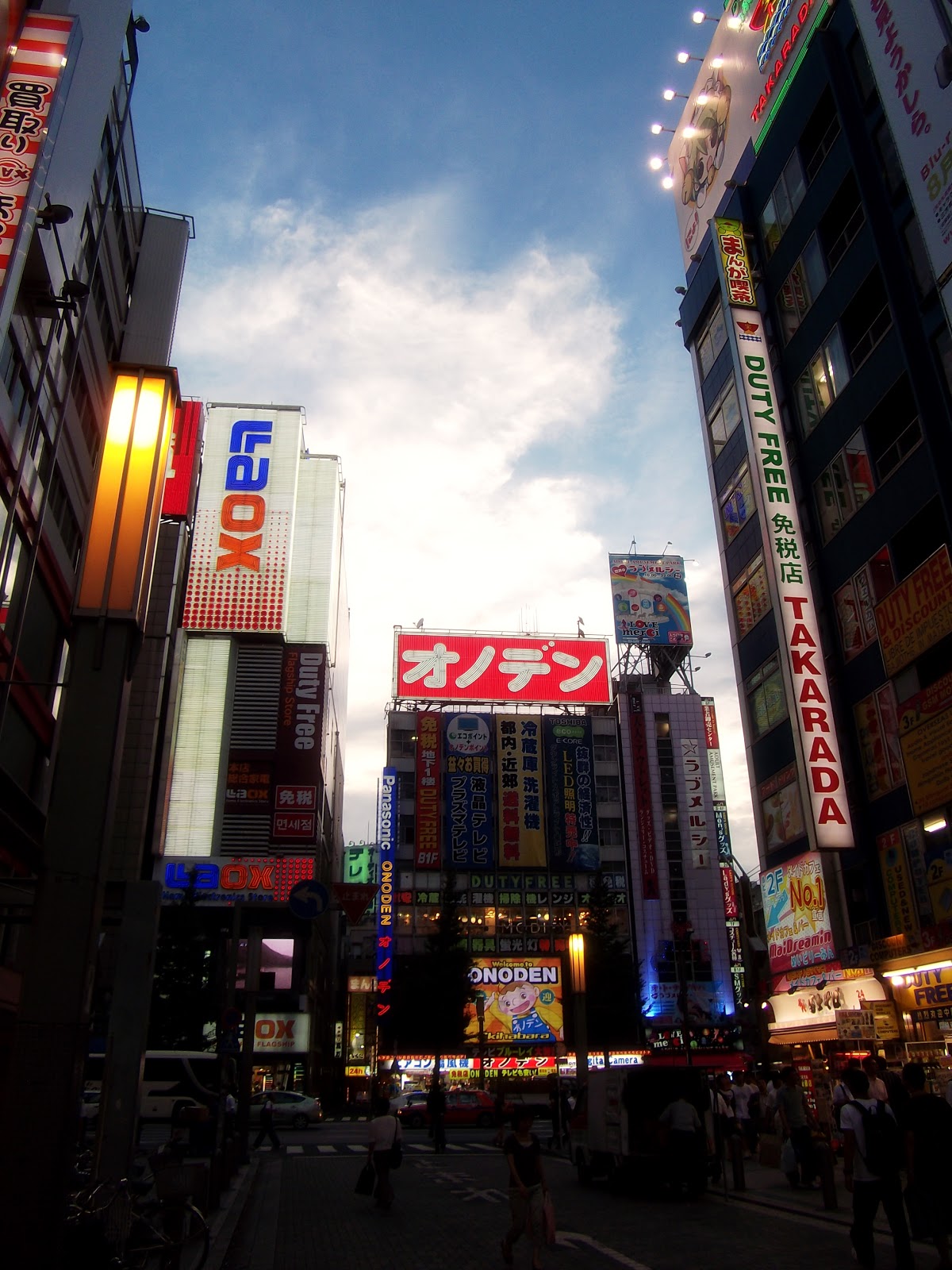
Let's make things clear. I don't want to write any travel-guide slogans but if you ever go to Tokyo and have even the slightest interest in either electronic consumer goods or Japanese pop culture, you should visit Akihabara Electric Town. This relatively small (according to local standards) shopping area is a part of Chiyoda and stretches across only a few blocks. It is, however, packed with numerous street stalls as well as huge, many-storied, luxurious department stores offering their customers any kind of electrical equipment and hobby related commodities. Otakus come here from all over Japan to admire their favourite manga, anime, computer games and figurines of the characters in all sizes (including real-life scale). There are shops with do-it-yourself models, specialised magazines, really strange souvenirs, basic electronic parts or wires, not to mention newest computer hardware or even prototype robots. What's truly unique and pleasantly nostalgic, you can also buy some vintage stuff like prehistoric gaming systems or wooden-case equipment. Namely everything that runs on electricity is here, no matter if it's old or new. No wonder that this place attracts a lot Chinese millionaires who spend here their fortunes on "cool Japanese stuff", so fashionable in the Far East countries. And yes, the prices are sometimes sky-high, but at least it's always free to look.
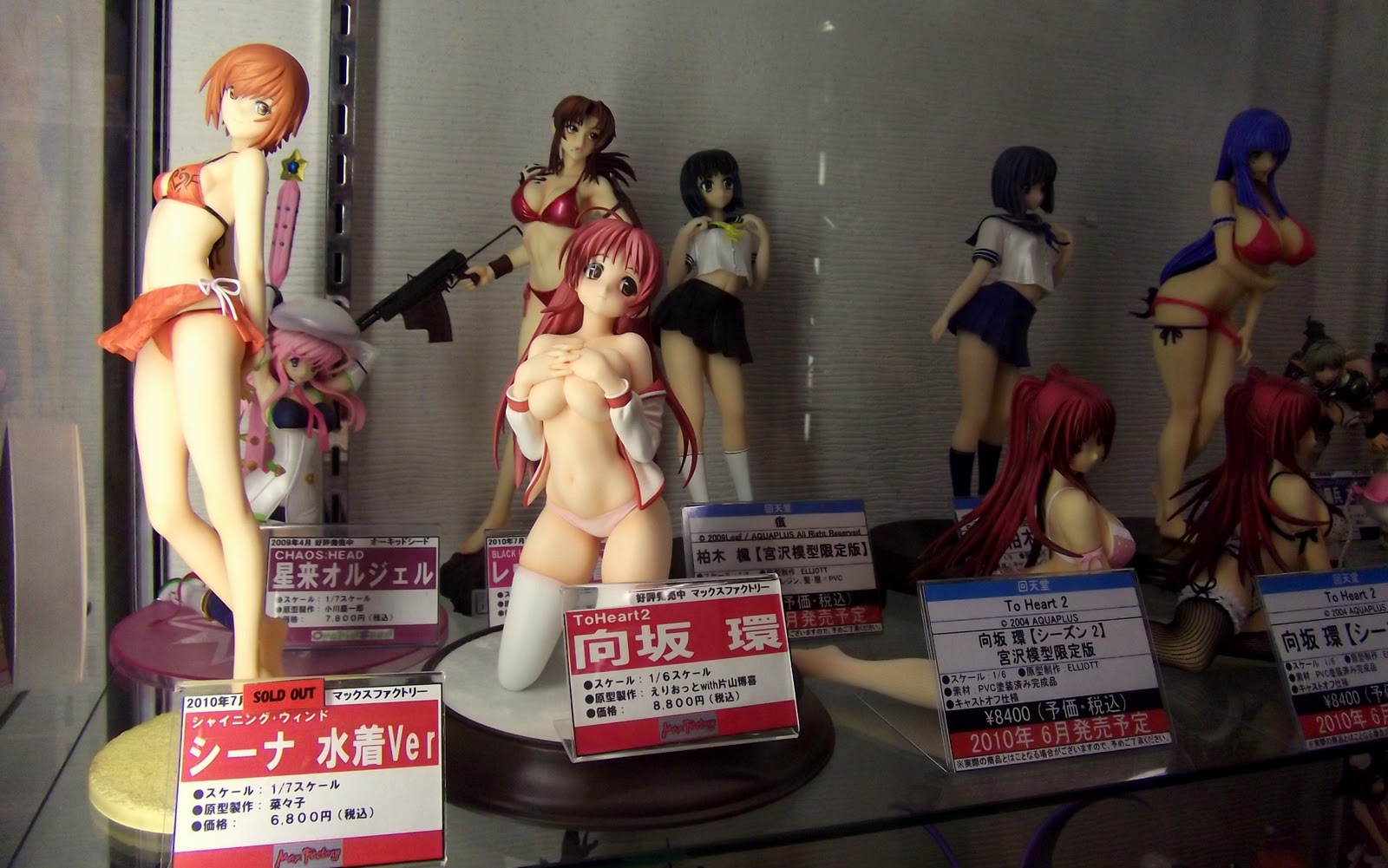
Also, I've never considered myself a true manga fan, but I have watched some of the most well-known ones in my time. And I have to say I was just in awe of all the stuff I found in Akihabara. Clothes, mugs, mouse-pads, chopsticks, carpets, toilet-seats - everything in anime-related themes and obviously way to expensive. I especially liked all the beautiful, hand-made, precise figurines, strongly exposing heroines' womanly attributes. There was also a fair amount of hentai and special toys for adults, some of witch even I was too embarrassed to photograph. But this is Japan, erotica is around every corner and not a huge taboo. Of course, it's also really well hidden from the kids, so no worries here. And speaking of adult entertainment, Akihabara also offers a wide range of "meido kafe" with cute, cosplaying waitresses. According to rumors, not only coffee is served there.
The Electric Town is really a lot of fun and surely a landmark in modern Japan's landscape. Although I have been there a few times (mostly to get good deals on my mobile phone and Internet connection), I never managed to take photos that would clearly show the specific atmosphere of the place. So this time I would like to post a picture by Rob Sheridan. Make sure to visit his gallery of some amazing Tokyo pics. It's here.
Sunday, November 7, 2010
Aizu Wakamatsu - the spirit of Japan
@facebook
The last weekend of October was home stay time for all Vulcanus students. We applied for it a couple of months ago (while still back in Europe) by filling out a special form with detailed information regarding our interests and preferences towards the Japanese host family that was going to take us under their roof and take care of us for these few days. The whole event was organised and conducted by Aizu Wakamatsu International Association with some help by our own EU-Japan Centre. After some good as well as pretty bad experiences in Japan, we thought we could expect almost anything from this programme and with mixed moods departed from Shinjuku on Friday morning. The four-hour bus trip took us on a relaxing tour around the picturesque autumn landscapes. Through tunnels drilled in enormous mountains we eventually got to our destination - the vast valley of Aizu.
Aizu Wakamtsu, the capital of the Aizu region, is a small city located in Fukushima Prefecture, about 300 km north from Tokyo's center. The moment we got there, we knew the reasons why it had been chosen for the home stay. Beautifully quiet, old, traditional and very different that Tokyo, it looked so promising. Aizu Wakamatsu dates back to 14th century when it was founded around the majestic Tsuruga Castle, the military and administrative center of the Aizu region until 1868. However, during the infamous Boshin War (a civil war of 1868/1869) the whole town was destroyed by the winning imperial forces. Before the war, Aizu was a loyal supporter of the old Tokugawa shogunate and therefore an enemy to the anti-samurai, pro-western reforms of young Meiji emperor. Fortunately for us, the town was re-founded in 1899 and since then, most of it's historic structures have been rebuilt. What can we all learn from this lengthy introduction? Well, Aizu has a strong bushi spirit and might be a good scenery for some kind of 'Last Samurai' movie.
After arriving we grabbed some nice udon in a small, cosy restaurant, the owner of which even took pictures with us. Then we met with Kita-san in front of the town's Boys' Statue and took a local bus for The University of Aizu. This relatively small college is famous for teaching exclusively computer science with international professor staff. This cosmopolitan school was a good place for a discussion about Japanese customs, gestures, art, stereotypes and culture in general. We divided into small groups and tried to figure something out together with Japanese, Chinese, Indian and Russian students of Aizu. Unfortunately, there was not enough time to go through the topics thoroughly but we still had a good time and made some friends. After small presentations of our results (most of which were hilarious) we met with the host families and headed for our new homes to get some much needed rest.
My host family, the Tashiro family, consisted of a mother, a father (both teachers of Japanese) and a cat (not a teacher). Their son, an art student at the University of Tokyo, was staying in the capital at that time, leaving his room just for me. I don't want to get into too much detail about everything I was doing during my stay there - suffice it to say that it was such a warm and funny time, definitely one of my best in Japan. I really felt as if these people were my family and I was just visiting some (very) distant relatives. They prepared some great and diverse traditional meals (like tempura, ramen, mushroom rice, shellfish and clam miso soup, to name just few) as well as the famous, time-honoured, hot Japanese ofuro bath. During the day, they took me out to do some shopping in a huge food market (I stuffed myself with free food samples handed out generously by shopkeepers) and to admire the beautiful and unique Japanese art in small local galleries. Being filled with samurai spirit for centuries, Aizu's people have a love for fine arts and precious craftsmanship. So we went to see the Urushi Festival, which is an annual exhibition of various wares (like paintings, sculptures, dishes or toys) painted with a special type of red or black lacquer (urushi) - the local speciality made from tree resin. One of the most notable examples of these beautiful and very expensive goods are figurines of the town's mascot - Akabeko, a red cow constantly nodding it's head. According to a legend, a long time ago people used cows for transporting wood used to build temples. During the construction of Aizu's biggest temple, all the cows fell down from overworking except for one. Since then, the sole survivor, Akabeko, has become a symbol of discipline, endurance and persistence - the virtues praised by all Japanese. Going back to my activities during the home stay, I was very glad to learn that my 'father' loved to play the guitar. We had some interesting conversations about Japanese music and played a little while sipping whiskey on the rocks. And the guitar was an old flamenco one. Priceless.
Furthermore, probably the most shocking experience was meeting a family friend, Kojima-san. We drove for about an hour into the woods to find ourselves in the middle of rice fields, surrounded by mountains and in front of a big wooden tatami house. As we entered the cold room we saw him in the middle, sitting on the floor with an American cigarette in his mouth and piles of papers, dishes and pillows around him. He was by far the most eccentric Japanese person I met and I was really surprised by his knowledge of Polish history. By the way, a lot of people I met in Aizu knew a lot about my country - from Chopin Year Celebrations to Cracow's Wawel Dragon. Kojima-san, a teacher and an amateur rice farmer, treated me to coffee with a bit of 'magical' water he makes by himself. How does he make it? It's a secret. I also learned he is a direct descendant of a samurai family and that we both shared fondness of Kurosawa's movies.
On Sunday evening we had to go back to Tokyo. Everyone was happy as ever and wanted to stay in Aizu just a bit longer. We felt very welcome and missed the kind of warmth and hospitality only a family can give. After saying goodbye and exchanging contact info, we departed for Tokyo. This time the dusk hid all the trees and mountains from us. But in the end we got to see the lights of the Infinite City, stretching as far as the horizon can go.
Subscribe to:
Posts (Atom)