Saturday, June 18, 2011

Culture Shock vol.2 - Kanagawa

@facebook

Since I usually tend to write about my trips around the country, I decided it would be nice to mention something about my everyday life for a change. Believe it or not, normal job and other prosaic problems fill most of my time here in Japan. At least that's been the case since the internship started in January. Now all the parties and sightseeing moved to weekends or other holidays (which are rather sparse) with little time to do anything other than job on weekdays. I work at NTT Communication Science Laboratories in the city of Atsugi, the hilly heart of Kanagawa Prefecture, just south of Tokyo and west of Yokohama. NTT, although maybe not as well-known in Europe, is the dominant telecommunications company in Japan and Asia, as well as the second-largest in the world. It's currently ranked 31st in the Fortune Global 500 ranking of the world's top 500 companies in terms of revenue. Pretty impressive, huh? As a leader in its market, NTT can afford to maintain specialised research laboratories, therefore investing in the development of new technologies in the vast fields of engineering, physics, communication science, human perception analysis, etc. My internship belongs to the Communication Environment Research Group in in the Media Information Laboratory. If that doesn't tell you anything, that's probably good because the subject of my work is secret and I'm not supposed to reveal it, even though it's quite interesting. I can tell you, however, that the main office of NTT CS is located in the outskirts of Kyoto and lately I've been lucky enough to get invited to the Open House event held over there.


Going back to the theme of my new home, I live in a NTT workers dorm in the city of Isehara, quite close to my office. The town's not that bad, but it's mainly a bedroom community for the nearby Yokohama and greater Tokyo areas. With it's population of around 100.000 (and Atsugi has twice as much), Isehara could be a medium-sized Polish town with some attractions, whereas in this case it's just a residential area with few stores or restaurants. It basically plays the role of some distant Tokyo suburbs. Fortunately, I can always get on the train and reach some bigger cities with ease if I want to do some serious shopping, meet with my friends or go to the cinema. Of course, living in the calm "country side" also has its advantages, the biggest of them being the captivating surrounding nature. Some of Isehara's outskirts belong to the Tanzawa-Oyama Quasi-National Park established to preserve the beautiful landscape of mountains, forests and lakes. The vast Park is great for hiking or late-spring bike trips, which can be as exciting as any other excursion around Japan. I've added some pictures taken during the trips to the Hakusan mountain and Miyagase Dam. Thanks Bartek for talking me into them!


The main shock, apart from quite different work culture in the company and interpersonal relations, comes from all those Japanese traditions and customs that appear in everyday situations. It feels a bit different when you're just a tourist. They show you the most representative tip of the iceberg and then off you go. But living here for a while makes you immerse in this lifestyle deeper and appreciate it more for what it is, understand it. Although I will probably never truly get it and they will always treat me as a layman outsider, I'm slowly starting to grasp the language and the culture behind it, at the same time learning a lot about myself and my own heritage. I'm happy to see that happening because it was one of the predefined goals of the whole Vulcanus experience.


Luckily enough, there's a unique lady in our NTT office, called Narumi, who's fascinated with Japanese tradition and keen on passing the knowledge to eager foreign interns. She's overflowing with positive energy and organises all kinds of activities for us, including cutting out cups and chopsticks from bamboo, rolling sushi for Setsubun (the beginning of spring holiday) or playing taiko (big Japanese drums) with a local club in preparations for the summer gig. All of this is really fun and proves how much Japanese care for their customs. Another big event was the world-famous cherry blossom (Sakura) period which comes down to cheerful family picnics under the phenomenal white trees. The sight of a snow-like shower of cherry flower petals is truly a one of its kind experience and one of the symbols of Japanese culture. The culture I now bask in.

Tuesday, May 31, 2011

Hiroshima - the city of water

@facebook

Golden Week (actually ten days) is the longest Japanese holiday period (except Christmas/New Year celebrations) on the turn of April and May. However, while the December winter holidays are a time of family reunion and religious rites, the nice spring weather strongly encourages you to do some serious tourism. And in fact, most of my friends embarked on long trips to some more exotic locations, like South-East Asia, Korea, Kyushu or Hokkaido. Unfortunately, I had to show up in my company in between the individual national holidays (or more precisely, I found out that I don't have to but it was way too late to do any reservations). I was then left with only a weekend-long trip to the south-west of Japan, the Chugoku region, namely to the neighbouring cities of Miyajima and Hiroshima, the latter known as the Japanese City of Water.


I slept through the horror of a twelve-hour-long bus trip (too cheap to take a Shinkansen? yes!) and found myself in the westernmost region of the main island of Honshu. With sunny weather and good moods, my friends and I began the standard sightseeing procedure through the town's history. First, the Hiroshima Castle ruins making a vast park with the reconstructed main keep, ninomaru gate and Hiroshima Gokoku Shrine inside its premises. Second, the lively modern city centre with a shopping district, a j-pop gig, some friendly locals and cabbage filled okonomiyaki lunch. Third, the world-famous Hiroshima Peace Memorial Park, being a vivid and honest testimony of indescribable suffering which led to humble understanding and heroic reconstruction. The completeness and accuracy of all the symbols and monuments really touches the heart and shows how mature the post-war Japanese society has come to be. Especially that they never seem to hide their own faults in bringing the catastrophe upon themselves. The whole place strongly reminded me of Auschwitz because of the all-around scars of the past and feelings of historical importance. Hiroshima, however, seems to leave you much more optimistic about the future, not only exposing the pain, but also putting emphasis on the town's resurrection and subsequent worldwide peace campaigns. And also thanks to the rainbow-hued origami cranes - symbols of good fortune.


Leaving the elevated tone behind, we took the evening tram (yes, a tram in Japan) to the nearby Miyajima, where we stayed in a party youth hostel. We were sharing a huge common bedroom with an international and at least tipsy crowd of Americans, Aussies, Mexicans, Japanese and various Europeans (English, Swedish and so on). It's easy to guess that the atmosphere was loose and we had a good time. The following morning, fresh and well-rested, we took a ferry to the beautiful island of Itsukushima. Combining all the most prominent elements of a typical Japanese landscape (the sea, the green mountains, amazing temples and shrines, deers wandering the streets), the island is included in the Three Views of Japan, the canonical list of Japan's three most celebrated scenic sights, compiled by Confucian scholars in the XVII century. This of course speaks for itself and further comments seem unnecessary - just looking at the photos is enough to tell how magical the place is, especially the World Heritage Site of Itsukushima Shrine with its famous gate that seems to be floating during high tide.


Why is Hiroshima called the City of Water? Probably because it was founded on a river delta coastline and consists of many islands separated by canals. Some parts of the town even used to be waterside marshes, now obviously reclaimed by people. Hiroshima is also an important port town, overlooking the whole Seto Inland Sea. Originally, I wanted to mention the atomic bombings in the title of this post, but opted against it. For me, Hiroshima and its region are simply much more than just victims of past violence. They are a symbol of Japanese endurance and the beautiful, traditional lifestyle, always so close to the sea.

Tuesday, April 26, 2011

After school 2

@facebook

I do realise that I finished the Japanese language school last year and have been working in a company ever since, but I've still got some after-school stories to tell. They simply didn't make it to the first post or happened afterwards. So get ready for more incoherent thoughts on...


Zen meditation. One Friday afternoon, instead of practicing new verb forms, we took a brake and went on a small cultural bus-trip with our teachers to a nearby Buddhist temple. Inside we met some nice monks who explained us the main principles of zazen ("sitting meditation"), gave us pamphlets and allowed to try the whole thing ourselves, watching over us with bamboo sticks in their hands. Generally, the have the authority to (slightly) hit anyone who's not doing it right, but we were lucky (or just gaijins) and no one got "corrected". Afterwards we met for a short meal, discussed the everyday life of a Japanese monk and went our own way. That's it. For me, the most impressive part of the ceremony was the mantra they sang at the beginning, accompanied by a powerful taiko drum. A truly magical experience, a trance perfectly setting the mood for meditation that followed. And zazen itself was simply about slow, controlled breathing with your stomach and freeing your mind from any thoughts. It's more difficult than it seems and so much different than just reciting some earlier remembered phrases.


Tsukiji Fish Market. Officially known as the Tokyo Metropolitan Central Wholesale Market, it is situated in a district of Chuo called Tsukiji. The word itself means "reclaimed land", as the whole neighbourhood used to be a marshy delta of Sumida River. Tsukiji was, however, dried and built-up throughout the XVII century, becoming the site of the commercially and touristically important market after the previous one in Nihonbashi was destroyed in the Great Kanto Earthquake. The Tsukiji Fish Market is the biggest of its kind in the world and offers foreign visitors a unique chance to witness the early morning tuna auctions. The massive fish are brought in by smacks straight from the ocean and some incomprehensible rituals are then conducted by the auctioneers. Is it really worth the hassle? Well, you have to queue up first thing in the morning (the market opens around 5.00 AM so staying overnight is highly recommended), it stinks and there's fish blood everywhere. But people still get attracted in vast numbers because of the market's uniqueness and a chance to have some incredible fresh sushi for breakfast. Also it's a great experience after a crazy drinking night when you just want to sober somewhere up and wait for the first train to take you home.


Miki's Party and End Year Party. Miki-san from the EU-Japan Centre had just went on a maternity leave and was not to come back to work before our programme would finish. As a way to thank her for the support she had always given us and to congratulate on her new role in life as a future parent, we decided to throw a surprise party. Well, maybe it wasn't exactly a surprise, because she and her husband had to come to a community centre in Shinjuku, which we had rented for the evening, but still she was happy and mesmerized by the amount of food from our home countries we'd all prepared. Some people might say that I hadn't done anything and had just stood there drinking beer but that's not true! Anyway, the party was a huge success, felt so warm and familiar. On the other hand, the End Year Party was held in the EU-Japan Office right after our December presentation session. It included the school graduation ceremony as well as a meeting with some of the future Vulcanus in Europe students and instructing them a bit on how to survive in the Old Continent. It was a lot of fun and a perfect opportunity to finally thank our teachers and the EU-Japan Centre staff before we would go on a well-deserved Christmas holidays. The end.

Thursday, April 14, 2011

Refugee in Kobe

@facebook

The earthquake caught us during the Vulcanus mid-term reporting session on March 11th. We were all in the EU-Japan Centre building giving our presentations and making plans for the evening reunion party. Just 5 minutes before the coffee break the shaking started and left us quite panicked under the desks. For all of us, including the Japanese, the earthquake was the strongest we'd experienced in our lives and we were just glad the ceiling hadn't come down on our heads, which at some point seemed very much possible. Fortunately, the epicentre was too far from Tokyo to do any significant damage to the city, apart from a few collapsed buildings or fires, especially in the industrialized area around Odaiba. The trains, however, stopped, as well as the mobile phone networks, but the peninsulas surrounding the Tokyo Bay shielded the city from any tsunami threat. At first we didn't quite realise how serious the disaster was and would be for Japan and our lives here, but it slowly got to us as we spent the rest of the day watching the horrible news from the north and, well... drinking, to celebrate we were together and alive. Late at night, the trains started running again, so I went back home, almost suffocating in a wagon packed with commuters returning to their families after a few worried hours of imprisonment in the shaky capital. Most of the Vulcanus students were still in the centre and some of them, especially those living to the north of Tokyo, wouldn't be able to come back home for weeks.

I spent the weekend mainly resting after the exhaustion of Friday, following the news and realising that more and more of my foreign friends were leaving Japan, or Tokyo at least, heading south-west. The reason for that was certainly not the vision of an aftershock (which by the way came a few days later but failed to really impress anyone) but the rapidly escalating nuclear threat of the now-infamous Fukushima I atomic power plant. While the western news agencies heralded the end of the world as we know it, the Japanese media and people themselves were relatively calm and trusting in the officials. This quiet confidence did not stop them, however, from panic buying all the pastry, mineral water and cup noodles (yeah) they could lay their eyes on. The situation got slightly more nervous when the electricity shortage caused by the tsunami damage to the plants resulted in controlled blackouts and train holdup. Initially cool, I also started to feel insecure with time, which was propelled by some embassies (not mine) evacuating their countrymen from the capital, indefinite holiday at work (cancelled after one day) and widespread panic among the Vulcanus community. Eventually, I snapped and with no regular trains running I got out of my place (don't ask how) and boarded the earliest Shinkansen out of Tokyo. It was Monday, March 14th. Finally calm, I was heading for the safer Osaka to stay with my friends, think things through and watch the uncertain situation from afar.

My second stay in the Kansai region wasn't quite as fun as the first one. A drowsy collage of nervous Skype calls home, disturbing news of hydrogen explosions (I also learnt the meaning of the word "millisievert") and rain that seemed more radioactive than ever before. After arriving to Osaka I learned that the Kozenji dorm, where I'd stayed last time, was full of runaway Vulcanuses and their friends (around twenty people in three small rooms) so I had no choice but to invade my friends in Nara. Along with Inigo, Cristina and some occasional Japanese guests, we established a second Vulcanus Refugee Camp and spent most of the week in the idyll of Nanto, playing with sika deers. Even though we were probably a bit of a drag to Giuseppe, Nadia and Emmanuel, they were always very supportive and uplifting. Despite working in the morning as usual, they still took us out a few times and simply were there for us when we needed them the most. Thank you guys...


Although I did little to no sightseeing during that time, always preoccupied with more important worries, I still visited some interesting locations in the wonderful Kansai. Along with the Kasuga-taisha in Nara (a shrine famous for its many stone and bronze lanterns) and the modern, seaside Cosmo Square in Osaka (where I went to get a re-entry permit in case I had to leave Japan and return here later), the highlight of the whole week was the trip to Kobe on the last day of my stay in the south-west. Kobe, a city itself experiencing a major earthquake in 1995 and still recovering from its long-term consequences, is one of Japan's most important sea ports and its sixth-largest city. With an uncontinous history reaching ancient times (which includes being the capital for five months in the XII century), Kobe has always been a cosmopolitan hub for international trade, hosting waves of foreigners from old Chinese Empire, Korea, Vietnam and more recently the West. No wonder that Kobe has both the beautiful Chinatown and the Kitano estates modelled after European or American houses of the colonial era. A large combined group of Osaka and Nara Vulcanus refugees spent the whole day walking around the coast and earlier mentioned exotic foreign districts. We saw a local j-rock festival, the Kobe Port Tower and lots of ships. We also witnessed some kind of traditional dancing event in Chinatown and tasted the legendary shark-fin soup (but not the more legendary Kobe beef). We made new friends and simply had a good time, forgetting about our recent problems and finding new confidence in our group. Thanks to this, going back to Tokyo in an overcrowded evening Shinkansen was a lot easier and even a bit hopeful.


Of course, these difficult days were full of other events I don't really want to elaborate on (like the tough negotiations between the students, the EU-Japan Centre and the companies to save our contracts). I like to think that despite the general confusion and panic, we still managed to hold on together. And Japan also proved to be a strong country of brave and cheerful people that now deserve some peace from mother nature as well as help and kind words from the rest of nations. Unfortunately, some of my friends had to leave Japan anyway, not to return even after the situation got more stable. I'm sorry it had to be this way and wish to meet them someday to reflect on what's happened here.

Sunday, March 27, 2011

Osaka - the big finish

@facebook

Sunday 13/02/2011 10:00, Kozenji, Hirakata, Osaka Prefecture
We woke up after a late-night manly beer / YouTube session and found out that Bartek, a morning bird, had already left for Kyoto to see some other temples we hadn't had time to visit two days before. Being already a bit tired from all the sightseeing we decided to take our time, said goodbye to our hosts and slowly headed for our last stop - Osaka.


Sunday 13/02/2011 11:00, Kyobashi Station, Osaka
We met up with Bartek and continued our excursion to the famous XVI century Osaka Castle. The streets looked kind of familiar and we all agreed that it was like a smaller, more compressed version of Tokyo. Unlike the neighbouring Kyoto or Nara, Osaka has always been a mainly commercial city. Thanks to its large seaport and continuous development since ancient times (with dynamic industrialization in the XIX century) Osaka ended up being Japan's second largest metropolitan area (just after the combined forces of Tokyo and Yokohama). Although there are still some historic places to visit (unfortunately and similarly to Tokyo, many of them were destroyed during World War II) they are overshadowed by a modern landscape of glass, steel and concrete. Compared to the nearby skyscrapers of Osaka Business Park, the castle seemed like a small and fragile handicraft, although itself being quite tall and beautiful. The castle grounds composed a pleasant, open to public park with street performers and additional buildings like gates, turrets and temples.


After having lunch and walking around the financial Chuo district we took a train to the harbor with a mandatory Ferris wheel (this one's called Tempozan) and decided to visit The Osaka Aquarium Kaiyukan, one of the largest in the world. The whole aquarium tour is built around an interesting concept: the visitors first go to the top floor and then descent around the main tank observing how the sea life changes with depth. Of course there are some other displays unconnected to this idea, showcasing around 500 different species of Pacific animals, from penguins to manta rays and whale sharks. As the sun was starting to set behind the Osaka Bay, we took a quick look at the Port and went back to the city, this time to the entertainment district of Namba.


Bartek and Tomek left to catch the evening Shinkansen back to Tokyo, whereas me and Javier headed for the touristic and lively Dotonbori street running alongside a channel of the same name. With its many theaters, shops and restaurants it proved to be a real pleasure district for both our eyes (the marvelous mechanized and neon signs) and stomachs (okonomiyaki, even better than in Kyoto). We saw the landmarkish Glico Man and the Giant Crab, met with Nadia and Jarek and had a great dinner. A perfect day, not ruined even by a stressful search for my bus stop in a rather confusing maze of passages and tunnels of the main Osaka Station in the business district of Umeda. Thanks to Javi's undying support I had managed to eventually board the bus a few minutes before its departure for Tokyo. We ran like crazy and I almost spat out my lungs. Waving goodbye to the astonishing Umeda Sky Building, I was content with how great the weekend turned out to be and happy to be going back home.


At that time I didn't know that a month later I would return to Osaka as a refugee from a quake hit and panicked Tokyo...

Sunday, February 27, 2011

Ancient Nara

@facebook

Saturday, 12/02/2011 10:00, Kozenji, Hirakata, Osaka Prefecture
We woke up after a late-night manly beer session and found out that most of us had already ventured into the nearby mountains to explore some abandoned railway tunnels. Since the rain was pouring heavily, Grega and I decided not to go hiking. Instead, we went to visit our friends in Nara and see some of the ancient city. Yes, just like Kyoto and Kamakura, Nara used to be the capital of Japan. It can, however, boast being the first capital of the classical Japanese state back in the VIII century. Out of political reasons, the capital was then moved to the newly built Kyoto, yet Nara remained an important religious and commercial centre. It is sometimes still referred to as 'Nanto', which means 'southern capital', in opposition to Kyoto lying to the north.

Saturday, 12/02/2011 12:00, Nara Station
After a four train changes we finally got to the central station. We were welcomed by the locals - Emmanuel and his girlfriend Yuko, whom we had met the previous day in Kyoto. Together we ventured into the nearby Nara Park and I was immediately struck by the view of one of the town's symbols - the sika deers. The vast park and it's surroundings are inhabited by tamed deers, which according to a legend came to Nara with a god to protect the newly established capital. The deers wander carelessly around the streets and alleys, not being intimidated by passers-by or even cars. Mostly they are harmless and even bow to you in response (amazing trick) but once they spot food or any other item of interest, they can become a bit insolent to get it from your hands or even pockets (they ate one of my friends' paper temple ticket he had in his trouser's back pocket). Fortunately, their horns are regularly trimmed.


Anyway, we eventually reached the National Treasure of Todai-ji ('Eastern Great Temple') from the VIII century: home of the great Buddha statue and one of the biggest wooden buildings in the world. Honestly, it made a huge impression on me and is probably the most beautiful and overwhelming temple I've seen in Japan so far. Also by that time the sky cleared up a bit and allowed us to admire Todai-ji in it's full sunshine glory, from the Nandaimon (the Great Southern Gate) and it's two Nio guard statues to the middle gate, the Main Hall and the Daibutsu, the biggest copper Buddha statue in the world. The Daibutsu actually didn't look bigger than the Kamakura one, but that's maybe because it was located indoors. At the temple we met with the rest of our Nara friends: Nadia and Giuseppe and some guests from Yamaguchi (Marco) and Tokyo (Fifi).


After seeing the marvels of Todai-ji we retreated to have lunch in a local ramen joint and spent some time in a European style cafe recommended by Yuko. Some persuasive phone calls later we were joined by the tunnel hiking team and in full force went back to Nara Park to see some sort of light festival with beautiful illuminated decorations and very original artistic compositions of projected images. If this sounds dull and unclear, check out the attached movie. We also passed through another precious temple - Kofuku-ji.


In the end, we had a group dinner at an Indian restaurant, paid a short visit to our friends' dormitory and rushed back to catch the last train to Kozenji. Nara definitely surprised me in a positive way and felt so different then the nearby and also historic Kyoto. Modelled after old Chinese capitals, Nara seemed ancient, calm and harmonious. The deers wandering freely among humans also added to the magical impression of a bit forgotten city, where the time stood still and kept the past beauty alive. The bonus movie shows how traditional Japanese sweets are made in the streets of Nara.

Thursday, February 24, 2011

Snow over Kyoto

@facebook

Thursday, 10/02/2011 22:50, Shinjuku, Tokyo
After a long day at NTT and a sleepy train ride to Tokyo I found myself at the foot of the towering Shinjuku Center Building, waiting for the charter bus to take me for my long awaited weekend. The cold February wind, blowing relentlessly between skyscrapers left me shivering even as I took my seat, lit a small light above my head and started reading Bulgakov's 'The Master and Margarita'. In the famous book, a devilish stranger was described. One of the characters commented on his unpleasant appearance saying that he was probably Polish. After my eyes got tired, I lulled myself to sleep with The Cure's 'Kyoto Song'. I was to wake up in that city.

Friday, 11/02/2011 6:00, Kyoto Station
An even colder wind welcomed me in the past capital, hitting my face with a stingy mixture of rain and snow. Accompanied by the sound of my teeth I literally ran to the station building to hide myself from the storm. After a short tour of a rather unimpressive mall I realised that everything except an overcrowded McDonald's was still closed. Fortunately I was soon joined by Diego and Javier, who came with different buses. Since we still had to wait for the arrival of other friends, we decided to explore a bit more, led by Javi, who fortunately had already visited Kyoto during Christmas and knew his way around the main locations. First of all, Kyoto station's main hall blew my mind with it's astonishing modern architecture and a massive staircase leading to the "Happy Terrace" from where a beautiful panorama of the city could have been seen if not for the snowstorm fog. Fortunately, Bartek and Tomek didn't get lost and arrived around 9.00. Also, I found out soon enough that my summer shoes were not well suited for the weather and spend the next few hours looking for an open shop on a National Foundation holiday, only to settle for an expensive department store with golden knobs and butlers. But at least I got a pair of decent shoes.


On the way we saw the landmark Kyoto Tower, entered the courtyard of the huge Hongan-ji (Temple of the Primal Vow) and marveled at it's beautiful black gate covered in snow. This Founder's Hall Gate is supposed to be the largest wooden structure in the world... Anyway, we crossed the Kamo River, inhabited by some freezing cranes, and wandered around eastern Kyoto's atmospheric, narrow streets leading mainly to restaurants, gift shops and traditional Japanese inns. Eventually we got to Gion - the old geisha district, well-known among gaijins for being the setting of 'Memoirs of a geisha' novel/movie. We were lucky enough to actually meet some geishas taking a walk through the calm alleys. Although it was probably a bit rude, we still had to ask them to be kind enough and take pictures with us, which they did. At that moment I fully realised I made another of my dreams come true. I was in the beautiful Kyoto, surrounded by primeval wooden buildings as dignified as the delicately smiling geishas. Everything was important, filled with tradition and I thought that view, that scenery, that feeling were the reasons I came to Japan in the first place.


As the wet rooftops glittered in the shy February sun and the last remnants of the morning snow began to disappear, we plunged deeper into the dreamy surroundings. Creepy street art, the tall Yasaka pagoda, Hello Kitty Geisha and much more... With a bit of delay we finally got to the impressive Kiyomizu-dera, a temple of "pure water" placed on a hill with a beautiful view of the cityscape. How about descending into the main hall pitch-black basement where the only light source was the dim love stone, granting a single wish upon touching? Also at the temple we caught up with Grega and Jarek, our benevolent hosts for the weekend, who took us right away for a local speciality lunch (okonomiyaki and yakisoba).


We spent the rest of the afternoon roughly following the Historic Monuments of Ancient Kyoto World Heritage Site and there's truly too much write about. We saw the enormous war memorial statue of Bodhisattva (Ryozen Kannon), a wedding, Maruyama Park, cemeteries and got lost in a bamboo forest, where my camera's battery eventually died. Towards the end of our excursion, we were joined by Emmanuel and his lovely girlfriend and were ready for the final temple for the day - the silver Ginkaku-ji with it's precisely crafted garden. That was the limit of our endurance and after a dinner in an oddly Chinese restaurant we called it a day and headed for our well-deserved rest in Kozenji. What a day it was!

Sunday, January 30, 2011

Old Tokyo

@facebook

Actually, there is no such thing as an "Old Tokyo". Unlike most of big European cities, the capital of Japan doesn't have a typical old town or even any other major concentration of old architecture. Whatever historical sites are still left to see, they are pretty much scattered all over the metropolis and well hidden in between modern urban areas. This makes Tokyo a city of interesting contrast but also deprives its visitors of chance to experience the past Japan. Of course it is still possible to taste a bit of the samurai life while walking around some narrow, crowded bazaars or picturesque temple parks but these are all together quite rare in comparison with more present-day-like districts. As a result, those wanting to really immerse themselves in the past should take a trip to Kyoto, the old capital, and it's surrounding cities like Kobe, Osaka and Nara, where the old is still well preserved and Japanese traditions seem to be more visible than in the westernised Tokyo. Unfortunately, I haven't had a chance to go there yet, so right now I want to share with you my impressions about some historical sites of the Eastern Capital (and this is what the name 'Tokyo' stands for, in opposition to Kyoto lying to the west).


Tokyo is a relatively old city, dating back to Kamakura period, when it was simply a small fishing village with no significance at all, then called Edo, after a minor samurai clan that was governing it. In the late 12th century it was first fortified and in 1457 the Edo castle was built in the place where the Imperial Palace now stands. Throughout the course of history, Edo became more important and in 1590 it was finally obtained by Tokugawa Ieyasu, a powerful warlord, whose mausoleum is now in Nikko. When Tokugawa became the shogun and de facto ruler of Japan in 1603, Edo's rank and wealth grew as the new military capital, while the Emperor, the highest priest, was still residing in Kyoto. By the 18th century Edo was already the biggest city in the world with a population of around one million inhabitants (almost twice as populous as the biggest European cities of that time, London and Paris). The picture (or rather photochrom) below shows the panorama of the city around 1865.


The Japanese political schism came to an end in 1868 as a result of the civil Boshin War and the Meiji Restoration. The Emperor moved to Edo in 1869, making it the official imperial capital and the single military, religious and cultural centre. The city was renamed as Tokyo and the Edo Castle became the Imperial Palace. Tokyo entered the period of rapid growth and versatile development, which more or less continues to the present day. So what are the reasons for Tokyo losing most of its old urban areas and replacing them with modern structures? Unfortunately, the capital suffered some incredible catastrophes as well, mostly in the first half of the 20th century. First of all, the 1923 Great Kanto earthquake devastated most of Tokyo and Yokohama in only 10 minutes, killing up to 150.000 people. Not only was Tokyo hit by one of the most powerful earthquakes recorded in Japanese history, but also by extremely high winds from a nearby typhoon, that caused the fires to rapidly spread all around the city.


The other catastrophe (and by far worse) was the bombing of Tokyo by the United States Army Air Forces during World War II. It started in 1942 as a 'morale breaker' and a direct response to the Japanese attack on Pearl Harbor, but soon changed into a full scale strategic bombing of 1944 and 1945. The fire showers consumed most of the beautiful old wooden buildings and more than 50% of the city was destroyed. The estimated number of 100.000 deaths seems to be greatly lowered by both American and Japanese authorities interested in maintaining the friendship between both nations. Unfortunately the savage bombings of Tokyo by the USA are not a well-known fact, despite being maybe more devastating than both Hiroshima and Nagasaki atom bombings combined.


Going back to the present matters, it is really amazing how Tokyo has managed to recover from all these damages, transforming into a true global city and still keeping some of its bygone charm. Bits of it are well visible in the district of Ueno with it's well-known park and a neighbourhood of finest cultural sites, like three National Museums, temples, shrines, libraries and a lively street market. There's also Japan's oldest and most famous zoo established in the late XIX century. Another place worth seeing is the Asakusa district, home to the great Senso-ji, an ancient Buddhist temple from the VII century (the capital's oldest). Asakusa used to be Tokyo's main entertainment district with many theaters (later cinemas), festivals and a small carnival. Although it is now far less popular with the young people than newer districts like Shibuya or Shinjuku, it's still a major touristic attraction. It is said that Asakusa's narrow alleys (like the pretty Nakamise-dori), filled with traditional music coming from shop speakers and the smell of food hastily prepared in street stalls, are somehow reminiscent of Kyoto. And there are also 45 actively working geishas in the area.


Finally, the most impressive historical area of Tokyo must be the Imperial Palace itself and it's surrounding Gardens. Located in Chiyoda district, the huge Palace area consist of the Emperor's residencies, archives, museums and administrative buildings. Unluckily, normal visitors are not allowed into the heavily guarded inner grounds, including the seven-winged Kyuden (the main palace), and can only stroll around the Gardens, watching the palace from afar. There are special times of year, however, when everyone is allowed inside. These include the Emperor's birthday on December 23rd, when he even greets the cheering crowd that gathers in the Reception Hall. This year I was unable to attend, maybe I'll go some other time. And this concludes the small tour around the capital's history. The bonus movie shows a small shrine in Harajuku visited by me and my good friends a while ago after a night out in Tokyo.

Wednesday, January 12, 2011

In the city of the future

@facebook

...it is difficult to concentrate. For someone born and raised in a very beautiful but still quite marginal periphery of Europe, the modern Tokyo seems like a city of tomorrow. Not everything here is perfect, obviously, but for the most part it's a relatively clean, well-organised, safe and truly exciting place. Also very different from some big metropolises of the Old Continent I've visited, since it combines the all-around comforts of technology and state of the art urbanisation with traditional elements of Japanese culture and popculture. So next to the tallest glass towers there are some small wooden temples snoozing quietly in lovely parks with fish-filled ponds. Just a few steps after the biggest crossing with six-lane multilevel streets, five different pedestrian bridges and ten lines of metro, monorail and regular train intersecting above and below, you can stumble upon a narrow picturesque street with traditional small stores, ramen shops and stalls selling all kinds of stuff. Tokyo is a delightful city of many colorful contrasts.


At times, however, it can be somewhat depressing. In this ocean of people, wealth, fashions and success you can painfully see how small, unnecessary, insignificant and imperfect you are. And the everlasting loneliness is multiplied by all the passers-by you want to talk to or touch but you can't... by all the places you want to go but don't have time... by all the things you want to have but can't afford. And you miss your previous life back in Europe, your friends and loved ones, your favourite places and drinks but you grow apart and they start to be just memories, fading away each day. But than you realise that you can't really replace them here with anything new because of this perpetual loneliness and isolation. Finally, you find yourself suspended in this dream world, not wanting to go back home but also not having anything to look forward to or even relate in to this surrealism. Maybe it's the language, maybe the mentality, maybe the stereotypes or fear of rejection but it's so hard to really integrate and finally feel secure, valuable. Only the everyday obligations like school or work can keep you in touch with reality but kind of suffocate you at the same time, which doesn't help in the long run.


Tokyo is neither an utopia nor a dystopia, it's just a few years ahead of the world I'm used to. It's definitely not a soulless concrete giant like some like to depict it. Even though it sometimes tends to bring up some gloomy feelings, I got to like it a lot, but it's more of an addiction by now. Still being in one of the biggest, if not the biggest city in the world gives me some satisfaction. And I'm not done exploring it yet. Linked to this post you can find some pictures I took all around Tokyo that I think correspond to it's futuristic, astonishing nature. But mostly they are just random. They show the most impressive commercial and business districts of Shinjuku and Chuo (both alternatively considered de facto city centres) but also some more obscure places visited with my friends. Enjoy... and check out the Radioheads.

Wednesday, January 5, 2011

Nikko is Nippon

@facebook

Nikko, which means "sunshine", is a small town located around 150 km north of Tokyo, exactly between the capital city and Aizu Wakamatsu. It is placed in an impressively mountainous surroundings highlighting the most representative and beautiful features of the natural Japanese landscape. Dense forests, lakes, waterfalls and hot springs, as well as monkeys running through the streets of small picturesque settlements. Combine it with some well visible cultural and historical sites and you'll get a perfect short-term trip destination for Japanese and Gaijinese tourists. On the last weekend of November we also decided to visit Nikko in order to escape from the city and for a second forget about the upcoming horrors of school, like tests and final presentations. The team consisted of some of my European friends, Taiwanese girls from the School and Matija (a guest star from Slovenia), who came to Japan to visit his brother and one of the Vulcanuses, Grega. Complicated enough? Ok then...


We took the early Saturday morning train from Asakusa and by noon were already accommodated in a cold but cosy hostel right next to the Nikko station. The owner was very friendly and, being used to hordes of foreigners visiting his place, spoke some pretty good English. After a brief lunch (and a visit paid to a Hello Kitty shop) we headed for the nearby mountains by a bus packed with eager hikers - native as well as Russian, Indian, Chinese, Spanish (we met a couple from Barcelona at the hostel), etc. The view from the windows was truly breathtaking - as the overcrowded bus climbed up the spiral of steep slopes, we could easily admire the rocky horizon of the entire Tochigi Prefecture. Japan (or the Tokyo Area, to be precise) is generally much warmer than Poland and even in late November the weather is pleasantly warm. But the cold air from mount Nantai really made us remember that the winter was coming.


That did not, however, stop us from exploring the area - we saw the impressive Kegon falls and some Japanese macaques (the famous Snow Monkeys) hanging out on the rooftops. Some of them were even bold enough to approach us asking for food (fortunately they seem harmless). After strolling around the magnificent Chuzenji lake (brilliant light) we stopped for some hot chocolate in a wooden coffee house. Just a small trip to local Kotoku hot springs and we could go back to Nikko to get some well deserved rest. The night bus trip downward was crazy and nothing short of a roller coaster ride, leaving me quite dazed. And in the hostel we managed to wake some poor Japanese guy and an Australian girl up with our whispering. The Sydneysider told me about her trip to Poland and how she loved Cracow. The 'Nature' day was over.


The next morning we were woken up by the town's trademark beautiful sunshine and with good moods set out to marvel at the monuments during the 'Culture' day. We basically toured Nikko's World Heritage Site, which at that time of year was still elegantly decorated with the autumn leaves. We started from the old Japanese garden (Shoyo-en). The one in Wrocław, although simply beautiful, is still nothing compared to the real thing. Very close was the Treasure House, a small gallery with portraits of all the shoguns as well as some old pieces of art. We visited the Rinno temple dating back as far as the 8th century and saw the enormous golden statues in the Three Buddha Hall, making the one in Kamakura look a bit poor (no pictures were allowed, though).


Then we continued to the impressive 17th century Tosho-gu shrine, which holds the mausoleum of Tokugawa Ieyasu himself and his grandson Iemitsu, both great and respected shoguns. The shrine's other attractions include the Three Wise Monkeys (yes, the famous "see no evil, hear no evil, speak no evil" statue), a small tour of an old Japanese brewery and of course a traditional five-storied pagoda. Needless to say, we saw a lot of wonders that day, like the Sacred Bridge Shinkyo (which you cannot cross) at the Futarasan shrine and countless gates, wooden sculptures, detailed altars and many more. Enchanted by all of this, the delicious food (fried octopus? why not?) and good friend's company, we finally took the evening train to Tokyo. We got enough positive energy to deal with the passing of everyday human events.

Wednesday, November 24, 2010

After school

@facebook

Yes, I'm back to school, but this time, it's the Tokyo School of Japanese Language. Everyday lessons, tests, small classrooms, teachers, homework - just like high school. And the atmosphere's exactly the same, we always have a good laugh and no one is really that stressed about the whole thing. Of course, there is a bit of rivalry and some usual conflicts but that's natural and nothing to be concerned with. Also, for the past three months all the Vulcanuses have really come close to each other. We hang around a lot, go out all the time and organise small excursion to various places in and around Tokyo. Our high school lifestyle has it's up and downs, though. Since we are a tad older and used to the freedoms of college, it's sometimes hard to study on a daily basis as well as regularly attend classes. The schedule of our language course is really tight so we are not allowed to be absent almost at all and have a lot to study. Fortunately, the school does its job very well and we're already able to speak some simple Japanese in everyday situations. Laying emphasis on conversation skills is, by the way, an important feature of our lessons and one that the school is famous for.


The Naganuma School was established just after World War II, thus being one of the first Japanese institutions freely teaching the language to foreigners. The classes are diverse - apart from regular grammar / conversation / writing / listening practice, we sometimes use the computer room and the special language laboratory, where we record our voice and improve our pronunciation. There are seminars and other occasional activities like calligraphy, tea ceremony or Tokyo field trips. All these activities combined with extremely long commuting leave us little time for anything else on weekdays. Sometimes, however, I do manage to find the energy to explore the city some more and take an after-school stroll around Tokyo. Here are some random thoughts on...


Shibuya. I wrote about my first trip to this district here. Back then I wasn't aware of the fact that I would visit it everyday since that's where my school is. Below you can see a bonus clip of the crossing as seen from Shibuya Station on a rainy night. The facebook album contains some pictures taken on my usual way to school as well as in other surrounding districts, like Chiyoda (near the Hanzomon Gate) or Setagaya (especially the cool Shimokitazawa neighbourhood, our favourite party spot).


Tokyo Disaster Prevention Center (Ikebukuro Bosaikan). Located in Toshima, it was the destination of our first school field trip. As a part of the Tokyo Fire Department, it fulfills the noble mission of educating the townspeople about the basic actions they should take in case of various natural disasters that frequently invade Japan. During our visit to the Bosaikan we took part in elaborate simulations that empirically taught us how to react to danger. We had to find our way out of a small maze of typical office corridors filled with smoke, keeping close to the ground and following the exit signs. We learned how to use real extinguishers putting out a virtual fire in an amusing yet difficult computer game. In a special room mounted on top of a moving platform we could experience a genuine magnitude 7 earthquake and prepare some hiding strategies. Finally, dressed in waterproof outfits, we faced a powerful typhoon and realised how hard it is to stand straight or even breath when an extremely strong wind hits your face with streams of cold water. All those events were preceded by a short introduction by our Japanese guide and in the end we watched a rather silly informative movie in Bosaikan's small theatre. All of this was a lot of fun (when not treated too seriously) but also a piece of useful information and I'm glad our tutors had thought about taking us there.


Ginza. A district of Chuo, it's unquestionably the most luxurious and expensive place in all of Tokyo and therefore one of the fanciest urban areas on Earth. Often compared to Manhattan's Fifth Avenue, it hosts a great number of department and flagship stores of the world's biggest fashion, jewelry and electronics brands like Tiffany, Gucci, Chanel, Dior, Apple or Sony. There's gold dripping from each wall and the smell of wealth in the air. You can see the elite of westernized Japanese businessmen with their kimono-clothed wives and butlers in white gloves. Let's just say it's a bit too expensive for a poor student like myself.


Welcome to Japan Party. Although it has little to do with my after-school trips, I've never had the opportunity to mention it here, so I'm doing it now. Organised a while ago by Vulcanuses in Europe, it was the proper welcome party that allowed us to integrate better with each other and with our new Japanese friends. It took place in Marie's (yes, the same who took us on a tour of Yokohama) house and was obviously very enjoyable. Just look at the pictures over here and you'll know why. And that's the end of this incoherent post.

Thursday, November 11, 2010

Akihabara - the electric town

@facebook

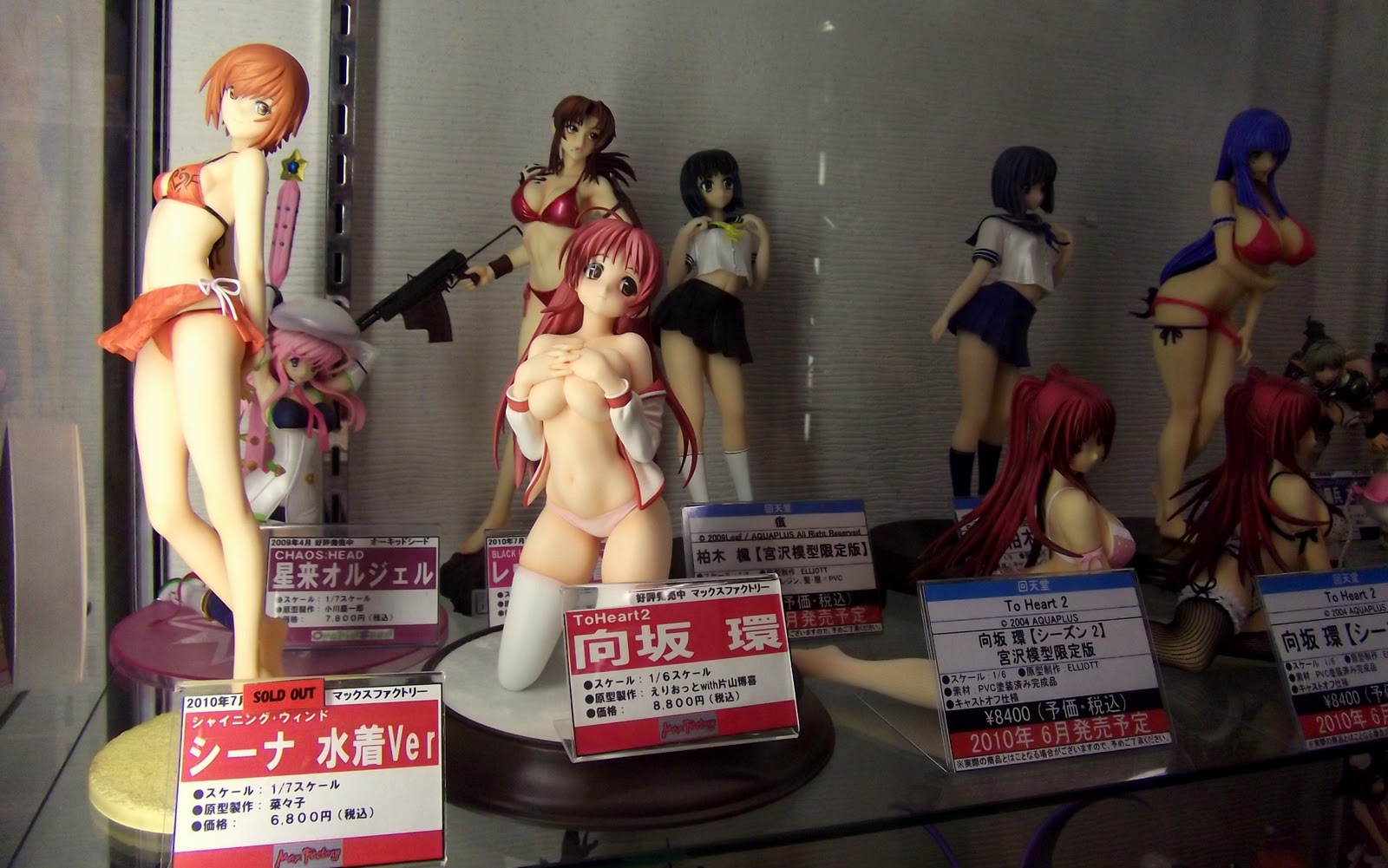
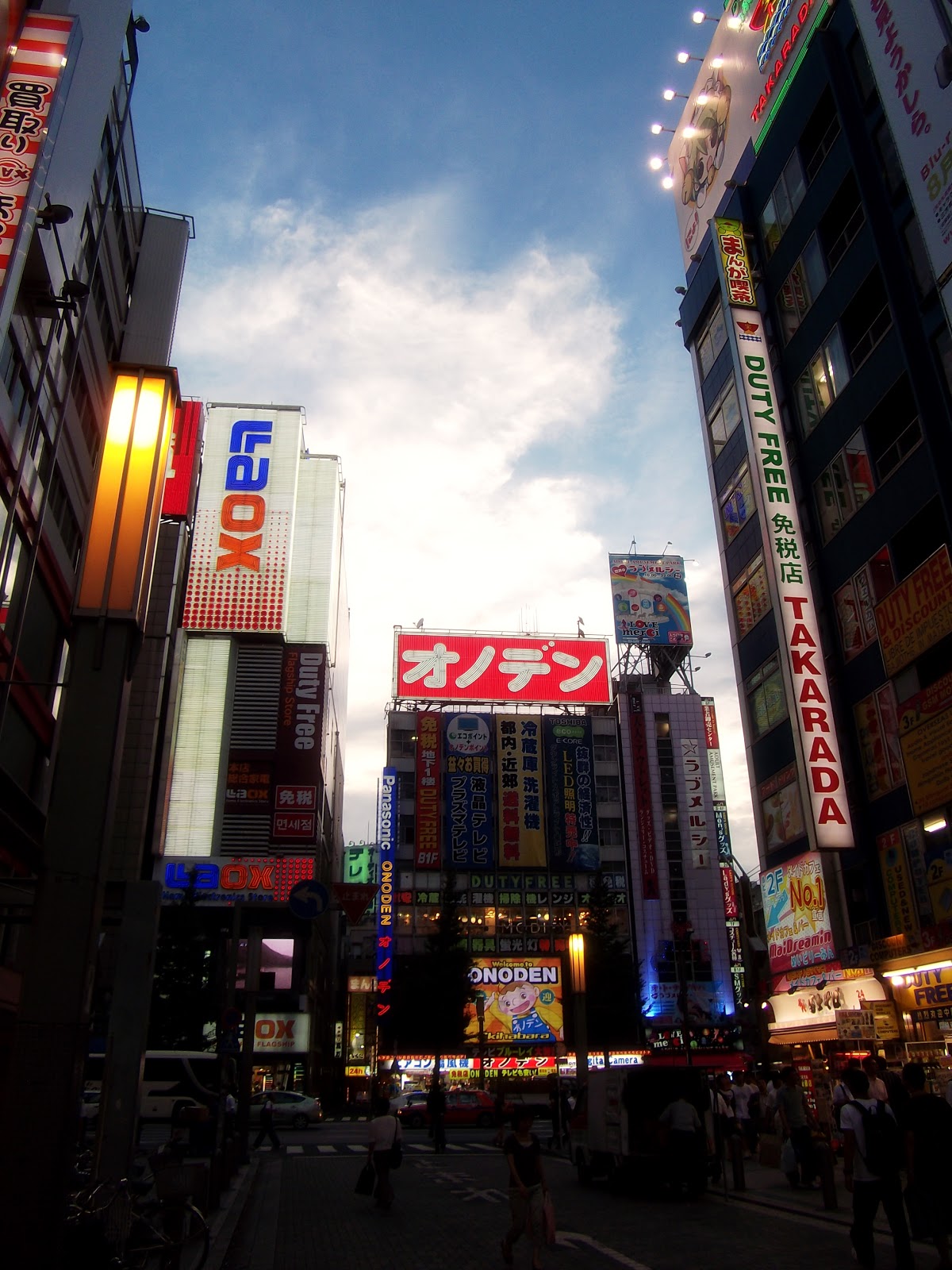
Let's make things clear. I don't want to write any travel-guide slogans but if you ever go to Tokyo and have even the slightest interest in either electronic consumer goods or Japanese pop culture, you should visit Akihabara Electric Town. This relatively small (according to local standards) shopping area is a part of Chiyoda and stretches across only a few blocks. It is, however, packed with numerous street stalls as well as huge, many-storied, luxurious department stores offering their customers any kind of electrical equipment and hobby related commodities. Otakus come here from all over Japan to admire their favourite manga, anime, computer games and figurines of the characters in all sizes (including real-life scale). There are shops with do-it-yourself models, specialised magazines, really strange souvenirs, basic electronic parts or wires, not to mention newest computer hardware or even prototype robots. What's truly unique and pleasantly nostalgic, you can also buy some vintage stuff like prehistoric gaming systems or wooden-case equipment. Namely everything that runs on electricity is here, no matter if it's old or new. No wonder that this place attracts a lot Chinese millionaires who spend here their fortunes on "cool Japanese stuff", so fashionable in the Far East countries. And yes, the prices are sometimes sky-high, but at least it's always free to look.


Also, I've never considered myself a true manga fan, but I have watched some of the most well-known ones in my time. And I have to say I was just in awe of all the stuff I found in Akihabara. Clothes, mugs, mouse-pads, chopsticks, carpets, toilet-seats - everything in anime-related themes and obviously way to expensive. I especially liked all the beautiful, hand-made, precise figurines, strongly exposing heroines' womanly attributes. There was also a fair amount of hentai and special toys for adults, some of witch even I was too embarrassed to photograph. But this is Japan, erotica is around every corner and not a huge taboo. Of course, it's also really well hidden from the kids, so no worries here. And speaking of adult entertainment, Akihabara also offers a wide range of "meido kafe" with cute, cosplaying waitresses. According to rumors, not only coffee is served there.


The Electric Town is really a lot of fun and surely a landmark in modern Japan's landscape. Although I have been there a few times (mostly to get good deals on my mobile phone and Internet connection), I never managed to take photos that would clearly show the specific atmosphere of the place. So this time I would like to post a picture by Rob Sheridan. Make sure to visit his gallery of some amazing Tokyo pics. It's here.

Sunday, November 7, 2010

Aizu Wakamatsu - the spirit of Japan

@facebook

The last weekend of October was home stay time for all Vulcanus students. We applied for it a couple of months ago (while still back in Europe) by filling out a special form with detailed information regarding our interests and preferences towards the Japanese host family that was going to take us under their roof and take care of us for these few days. The whole event was organised and conducted by Aizu Wakamatsu International Association with some help by our own EU-Japan Centre. After some good as well as pretty bad experiences in Japan, we thought we could expect almost anything from this programme and with mixed moods departed from Shinjuku on Friday morning. The four-hour bus trip took us on a relaxing tour around the picturesque autumn landscapes. Through tunnels drilled in enormous mountains we eventually got to our destination - the vast valley of Aizu.


Aizu Wakamtsu, the capital of the Aizu region, is a small city located in Fukushima Prefecture, about 300 km north from Tokyo's center. The moment we got there, we knew the reasons why it had been chosen for the home stay. Beautifully quiet, old, traditional and very different that Tokyo, it looked so promising. Aizu Wakamatsu dates back to 14th century when it was founded around the majestic Tsuruga Castle, the military and administrative center of the Aizu region until 1868. However, during the infamous Boshin War (a civil war of 1868/1869) the whole town was destroyed by the winning imperial forces. Before the war, Aizu was a loyal supporter of the old Tokugawa shogunate and therefore an enemy to the anti-samurai, pro-western reforms of young Meiji emperor. Fortunately for us, the town was re-founded in 1899 and since then, most of it's historic structures have been rebuilt. What can we all learn from this lengthy introduction? Well, Aizu has a strong bushi spirit and might be a good scenery for some kind of 'Last Samurai' movie.


After arriving we grabbed some nice udon in a small, cosy restaurant, the owner of which even took pictures with us. Then we met with Kita-san in front of the town's Boys' Statue and took a local bus for The University of Aizu. This relatively small college is famous for teaching exclusively computer science with international professor staff. This cosmopolitan school was a good place for a discussion about Japanese customs, gestures, art, stereotypes and culture in general. We divided into small groups and tried to figure something out together with Japanese, Chinese, Indian and Russian students of Aizu. Unfortunately, there was not enough time to go through the topics thoroughly but we still had a good time and made some friends. After small presentations of our results (most of which were hilarious) we met with the host families and headed for our new homes to get some much needed rest.


My host family, the Tashiro family, consisted of a mother, a father (both teachers of Japanese) and a cat (not a teacher). Their son, an art student at the University of Tokyo, was staying in the capital at that time, leaving his room just for me. I don't want to get into too much detail about everything I was doing during my stay there - suffice it to say that it was such a warm and funny time, definitely one of my best in Japan. I really felt as if these people were my family and I was just visiting some (very) distant relatives. They prepared some great and diverse traditional meals (like tempura, ramen, mushroom rice, shellfish and clam miso soup, to name just few) as well as the famous, time-honoured, hot Japanese ofuro bath. During the day, they took me out to do some shopping in a huge food market (I stuffed myself with free food samples handed out generously by shopkeepers) and to admire the beautiful and unique Japanese art in small local galleries. Being filled with samurai spirit for centuries, Aizu's people have a love for fine arts and precious craftsmanship. So we went to see the Urushi Festival, which is an annual exhibition of various wares (like paintings, sculptures, dishes or toys) painted with a special type of red or black lacquer (urushi) - the local speciality made from tree resin. One of the most notable examples of these beautiful and very expensive goods are figurines of the town's mascot - Akabeko, a red cow constantly nodding it's head. According to a legend, a long time ago people used cows for transporting wood used to build temples. During the construction of Aizu's biggest temple, all the cows fell down from overworking except for one. Since then, the sole survivor, Akabeko, has become a symbol of discipline, endurance and persistence - the virtues praised by all Japanese. Going back to my activities during the home stay, I was very glad to learn that my 'father' loved to play the guitar. We had some interesting conversations about Japanese music and played a little while sipping whiskey on the rocks. And the guitar was an old flamenco one. Priceless.


Furthermore, probably the most shocking experience was meeting a family friend, Kojima-san. We drove for about an hour into the woods to find ourselves in the middle of rice fields, surrounded by mountains and in front of a big wooden tatami house. As we entered the cold room we saw him in the middle, sitting on the floor with an American cigarette in his mouth and piles of papers, dishes and pillows around him. He was by far the most eccentric Japanese person I met and I was really surprised by his knowledge of Polish history. By the way, a lot of people I met in Aizu knew a lot about my country - from Chopin Year Celebrations to Cracow's Wawel Dragon. Kojima-san, a teacher and an amateur rice farmer, treated me to coffee with a bit of 'magical' water he makes by himself. How does he make it? It's a secret. I also learned he is a direct descendant of a samurai family and that we both shared fondness of Kurosawa's movies.


On Sunday evening we had to go back to Tokyo. Everyone was happy as ever and wanted to stay in Aizu just a bit longer. We felt very welcome and missed the kind of warmth and hospitality only a family can give. After saying goodbye and exchanging contact info, we departed for Tokyo. This time the dusk hid all the trees and mountains from us. But in the end we got to see the lights of the Infinite City, stretching as far as the horizon can go.


Thursday, October 28, 2010

Oktoberfest in Yokohama


@facebook

It's October, time for some Fest. Even in Japan? Yeah, apparently it's celebrated everywhere these days. Even though I am not a big fan of German folklore, I am definitely keen on some beer now and then, especially European. And the image of a typical Bavarian festival in oriental surroundings seemed so silly and yet so appealing that I deiced to go the moment I heard about it from Emmanuel. So I grabbed some Vulcanus friends (not literally, of course...) and headed for Yokohama, to the already-known carnival spot between western-stylized red brick buildings. Fortunately, this time the often fitful autumn weather was kind enough to be sunny. So... how was the party?


First of all, it was crowded. Lines of people before the entrance, lines for beer, lines for food, etc. But it was a big event and I should have expected nothing less. There were some gaijins, of course (Germans and Americans, for instance), but the venue and it's surroundings was filled mainly with Japanese craving for some exotic entertainment. Because how else could the locals call downing a fine weisswurst with a pint of even finer bier. The main spot was occupied by a huge tent with long benches, tables and a stage set up for a coarse brass band in traditional costumes. The sight of tipsy Japanese shouting "kanpai!" and dancing ecstatically to the sounds of German folk sing-alongs was surely a precious one. And to tell the truth, I felt quite content surrounded by plates of steaming "meat and potatoes" variations, boot-shaped beer mugs and cheering blonds. For a second there I felt some Silesian spirit and distant European air. (Un)fortunately, the prices brought me down to Japanese earth. Nonetheless, it was a very pleasant afternoon spent integrating with Vulcanuses and practicing Japanese with random chat buddies. And afterwards we headed for the famous Shibuyan Atom Club to dance away all those beers. But that's another story.

Wednesday, October 20, 2010

Kamakura - a link to the past

@facebook

I was told that there are actually two Japans. The first would be Tokyo and other major cities: modern, cosmopolitan, made of steel, glass and concrete. Always bright, always crowded, never asleep. The second would be the small towns, scattered around the countryside. A bit forgotten, old and wooden, closer to the nature and tradition. Of course Japanese manage to combine the two worlds pretty well: there's a lot of tradition in the Capital's centre and some modern stuff in even the tiniest of villages. But I really wanted to experience this other, smaller Japan, especially after a tiring night at Roppongi. The perfect place to visit is Kamakura, a half an hour by train to the south of Yokohama. A picturesque medieval town stretching from the Ocean's shore to the nearby hills. Densely covered with forests, shrines and temples, a popular hiking destination for the Japanese from big cities, mostly during weekends and national holidays. We (myself and seven other Vulcanuses) also visited the place during a holiday: September 20th is Respect for the Aged Day in Japan. So... what's up in the countryside?


First of all, an important fact: Kamakura used to be Japan's capital city in the Kamakura Period (yeah...) sometime between 1185 AD and 1392 AD. It was where shoguns from the Minamoto family resided. They overthrew the fragile reign of Kyoto emperors and established a military government in their faraway home town. The predominant ideology of those times was Zen Buddhism praised by the ruling warrior class of bushi (we call them 'samurai', which is a bit incorrect). Hence so many Buddhist temples in the area, which also was an important stronghold during the XIV century's Mongolian invasions on Japan. The first temple is actually a few meters away from the train station - it's the great Engaku-Ji, the Temple of Spirit or Perfect Enlightenment. It was build by the shogun after his victory against the Mongolians in order to express his gratitude and ease the souls of people who died in the war. The temple itself is a pretty big complex of different purpose buildings. I've never been to a Buddhist temple and I was charmed by the beautiful gates leading to different areas and the sacral places with many Buddha statues and altars. Everything there is wooden, some of the buildings are 700 years old, some were rebuild in latter eras after fires. There are also some graveyards (which is a distinctive feature of Buddhist temples - Shinto shrines don't have them) and small grottoes carved in the surrounding rocky hills. The place has many visitors yet it's very quiet and beautiful. I felt as if I went back in time a few hundred years, to the times of shogun and samurai. A great experience.


Then we went along the Daibutsu Hiking Road to see the famous Great Buddha statue. The narrow path led through a kind of familiar looking forest (apart from some bamboos maybe) situated on some steep hills, which gave as a great view of the beautiful landscape with the seaside and the whole town in the distance. If I hadn't known that it used to be the capital city, I would have never guessed - now it look silly compared to Tokyo. We passed some other temples along the way (some of them are branches of Engaku-Ji, which is a regional Zen centre). We also visited a small Shinto shrine or rather an altar hidden deep in the trees. Of course, before entering the holy ground, we had to wash our hands and mouths with water pouring from a cute blue dragon statue. Back home, I would never agree to do any religious practices, but here... it's Japan and I have to try everything. The nice thing about the humble Shinto shrines is an always present rack with small pieces of wood or paper attached to it, on which people can write down their wishes and intentions. During the walk I got to meet Tetsu-san, a 2009-2010 Vulcanus in Europe (Germany) student, who happened to visit Cracow and liked it a lot. Finally, we got to the Great Buddha. The copper monument was pretty impressive, about 10 m high and surrounded by lots of lots of tourist. After taking some typical Daibutsu photos and even going inside the statue (extremely hot), we went to eat some great ramen and ended up on Kamakura's beach. Everyone was too tired to do anything else, so we went back home. The end. Kamakura was definitely different than Tokyo. Closer to the nature, tradition and religion, it was indeed a very different Japan.